The first college apartment checklist should begin with what you already own, not a frantic trip to Target. I learned this in my first East Village apartment, where I bought a $39 particleboard bookshelf that leaned dramatically by Thanksgiving. It held three art books and one plant before giving up entirely. Your first place does not need to look finished on move-in day. It needs to function, survive takeout nights, and give you somewhere decent to sit while you figure out the rest.
My first college apartment checklist is practical, inexpensive, and mildly opinionated. Buy the boring things first. Thrift the personality. Do not spend your grocery money trying to recreate an apartment tour filmed with professional lighting.
Start with measurements, not a shopping cart
Before buying anything, photograph every room and measure the walls, windows, doorways, and narrowest hallway. Save those numbers in your phone. Measure the space beside the bed, the distance between the sofa and coffee table, and the height beneath windows. A 72-inch sofa is not a bargain if it cannot turn the corner into your living room.
Ask the landlord or property manager what comes with the apartment. Some rentals include a microwave, blinds, a shower curtain rod, or ceiling lights. Find out whether you can drill holes, paint walls, or use adhesive hooks. That information prevents duplicate purchases and security-deposit drama.
Make three lists: must have this week, useful this month, and decorative someday. The first list might contain a mattress, shower curtain, toilet paper, a lamp, and a trash can. The third list is where the cute rattan cabinet belongs. It can wait.
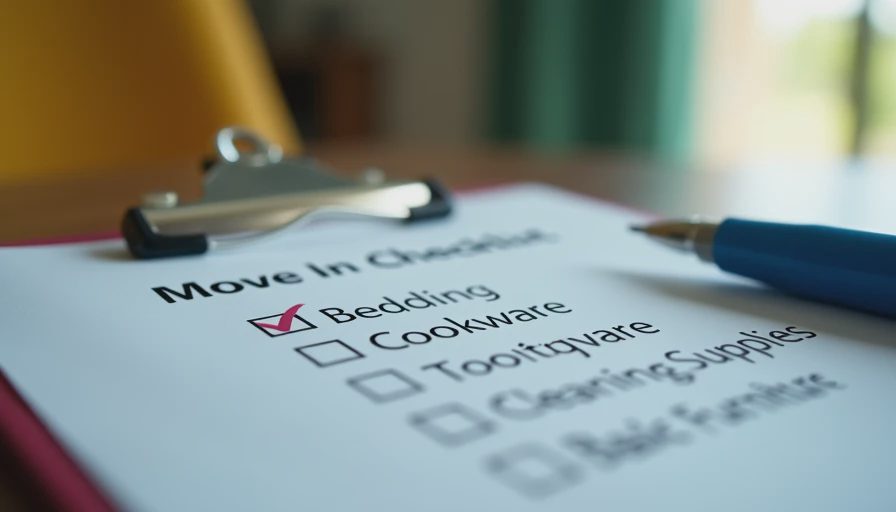
The first college apartment checklist for the bedroom
A mattress is the one item I would not buy from Facebook Marketplace. Look for a reasonably priced new mattress, a simple platform bed, or a used wooden frame that you can inspect carefully. You do not need a $2,000 bed. You do need sleep, especially if your class schedule includes an 8 a.m. lecture.
Buy two sheet sets so laundry day does not become a crisis. Cotton percale, jersey, and basic microfiber all work; choose what feels good rather than what photographs well. Add a washable mattress protector, two pillows, and one warm blanket. I would skip decorative pillows at first. They migrate to the floor, collect crumbs, and somehow cost $18 each.
A bedside table can be a $10 wooden stool, a sturdy crate, or a small secondhand cabinet. Put a lamp on it instead of relying on one harsh overhead fixture. My $12 thrift-store ceramic lamp has survived four apartments, one move in a snowstorm, and a cat who regards cords as personal challenges.
For clothes, use the closet before buying a dresser. If you need more storage, look for a narrow vintage chest with working drawers. Wipe it down, check for pests, and do not force a piece through a doorway that is clearly too small. This is not a test of optimism.
Kitchen basics that earn their cabinet space
The kitchen section of a first college apartment checklist should be short. Start with one good chef's knife, a cutting board, a skillet, a medium pot, a baking sheet, a spatula, a wooden spoon, a can opener, and a colander. Add one plate, bowl, glass, mug, and set of flatware for each person who lives there, plus two extras for guests.
You can thrift plates and serving bowls easily, but inspect them for cracks and avoid anything with badly damaged glaze. Mismatched dishes look intentional when the colors have a relationship. Mine are mostly cream, blue, and one extremely loud orange bowl I bought for $3 because it made me laugh.
Buy dish soap, sponges, kitchen towels, food-storage containers, aluminum foil, salt, pepper, and a small fire extinguisher. Check that the extinguisher is rated for ordinary household fires and keep it accessible. Skip the 14-piece gadget set. The avocado slicer will not rescue your budget or your breakfast.
If the apartment has limited counter space, use a rolling cart or a wall-mounted rail only if your lease allows it. A $35 cart can hold coffee supplies and move out of the way when you need to cook. That is a useful purchase; a giant decorative sign saying EAT is not.
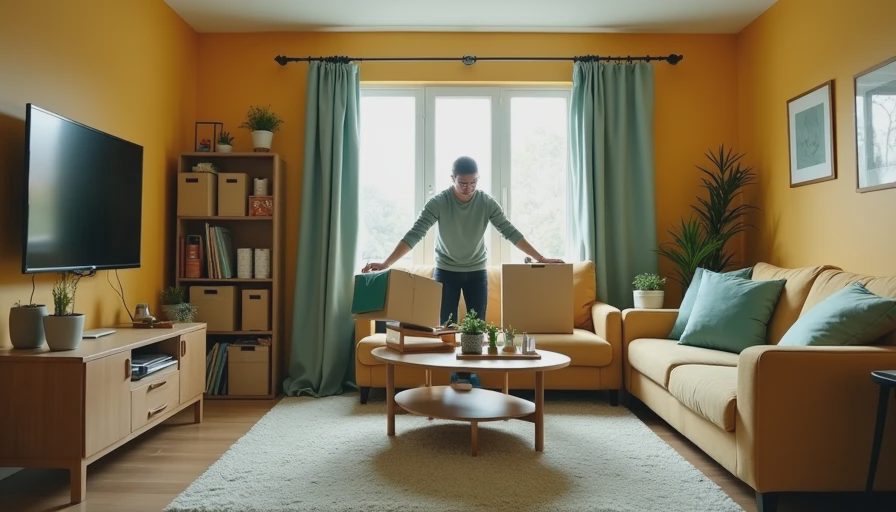
Make the living room comfortable before making it impressive
A first college apartment checklist often overemphasizes a sofa. Sofas are expensive, difficult to move, and frequently terrible. Measure the room first, then check used listings for solid frames, removable cushions, and cleanable upholstery. Avoid anything with a persistent basement smell, suspicious stains, or a frame that squeaks when you sit down.
A loveseat, two sturdy chairs, or a futon can work better than a bargain sectional. I once bought a $75 sofa because the seller said it was “barely used.” It was barely used because it was deeply uncomfortable. After six months, I paid someone $40 to haul it away. The lesson cost $115 and one strained back.
Add a floor lamp, a small side table, and a rug only after the seating is in place. The rug should reach under at least the front legs of major furniture. A postage-stamp rug floating in the center of the room makes every piece look unrelated. A secondhand 5-by-7-foot wool rug can be a better find than a new trendy one, but inspect it outside for odors and insects.
Use curtains when privacy or bright morning light requires them. If you cannot drill, tension rods are fine for lightweight panels. Do not buy curtains before measuring the window. “Close enough” is how you end up with fabric hovering six inches above the floor.
The cleaning, safety, and repair kit
This part is less glamorous but belongs firmly on the first college apartment checklist. Get an all-purpose cleaner, disinfecting cleaner, microfiber cloths, a broom, dustpan, mop, vacuum, toilet brush, plunger, laundry detergent, and rubber gloves. A $20 basic vacuum is more useful than a decorative mirror during your first week.
Keep a small tool kit with a Phillips screwdriver, flathead screwdriver, hammer, measuring tape, level, pliers, scissors, utility knife, and a few common screws. Add batteries, light bulbs that match your fixtures, an extension cord with surge protection, and a flashlight. Do not use an extension cord as a permanent substitute for an overloaded outlet.
Photograph the apartment before unpacking. Capture scuffed floors, chipped paint, stained counters, and anything that does not work. Email the photos to yourself with the move-in date. This takes ten minutes and can save a tedious argument when you move out.
Spend on the things you touch every day
The best first college apartment checklist ends with a spending rule: pay for daily comfort, not visual noise. A supportive desk chair matters if you study at home. A decent shower curtain matters if the cheap one clings to your legs. Blackout curtains matter if streetlights shine directly into your bedroom. A $25 lamp you use every night matters more than a $60 wall print.
Buy slowly. Live in the apartment for two weeks before filling empty corners. Notice where you drop your keys, where the afternoon sun lands, and whether you actually eat at the table. Then solve the problems you can see. Use Facebook Marketplace, thrift stores, estate sales, and neighborhood buy-nothing groups, but inspect upholstery, test drawers, and bring measurements.
Taste is free. Everything else, we thrift. A first apartment becomes yours through repeated small decisions, not one expensive shopping spree. Start with a mattress, a lamp, clean towels, and a place to put your coffee. The rest can arrive when your budget and your life make room for it.



Letters
No letters yet — be the first to write.