Hygge decor is supposed to make your home feel comfortable, welcoming, and worth staying in after dinner. It is not supposed to require a $3,000 boucle chair, a beige vase collection, or a kitchen that looks untouched by human hands. I learned this after spending too much on a “cozy” wool throw that shed on every black shirt in the apartment. The throw went to a neighbor. The lesson stayed.
Hygge is a Danish idea about comfort and pleasure in ordinary moments. In a home, that usually means warm lighting, useful textiles, natural materials, books, candles, and furniture arranged for conversation rather than photographs. The style works especially well in apartments because it does not depend on architectural drama. A rental with ugly overhead lighting can still become a place where people want to linger.
Start with light, not stuff
The fastest route to better hygge decor is fixing the lighting. Turn off the ceiling fixture and walk around your rooms at night. If the space is lit by one bright bulb in the middle of the room, that is the problem—not your lack of decorative objects.
I use three light sources in our living room: a thrifted floor lamp beside the sofa, a small table lamp on a painted cabinet, and a plug-in wall sconce near the reading chair. The floor lamp cost $28 at a flea market, and the shade was another $12. Warm bulbs in the 2700K range create a softer evening atmosphere than cool daylight bulbs. Use dimmable bulbs when your fixtures allow it, but do not buy a new lamp just because a social media post says you need one.
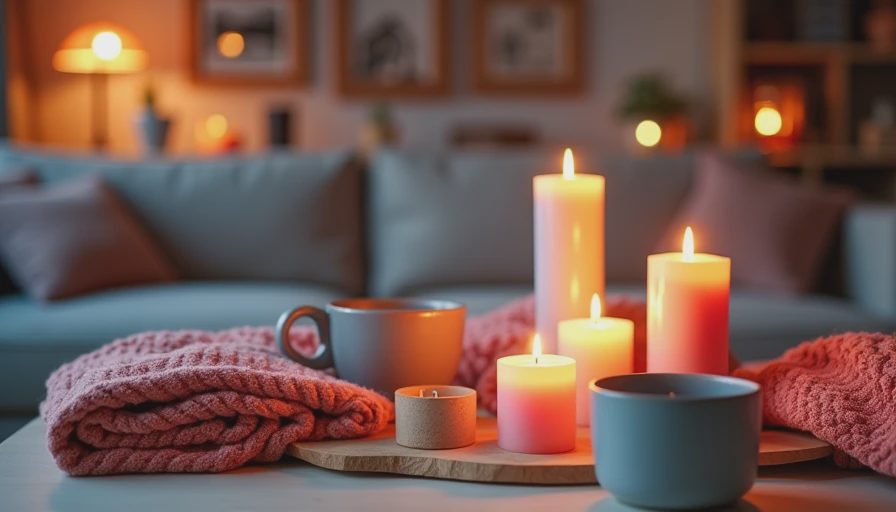
Candles help, too, but they are not mandatory. A $6 unscented pillar candle on a saucer can do more than a tray of tiny novelty candles. Keep flames away from curtains, pets, and the edge of a crowded table. Battery candles are perfectly respectable in a home with curious children or a cat who believes every surface is a launching pad.

Choose texture with a purpose
Good hygge decor has texture, but texture should earn its place. A knitted blanket is useful on a cold evening. A linen curtain softens harsh light. A wool rug makes a wood or vinyl floor more pleasant under bare feet. A basket can hold the shoes that otherwise form a small republic by the front door.
For our sofa, I chose a heavy cotton blanket from a secondhand shop for $18. It has survived three winters, two children, and Gouache the cat kneading it like bread dough. I skipped the delicate cream pillow covers because they would have lasted approximately one week. Instead, I bought two washable covers in rust and faded blue, then mixed them with a pillow I already owned.
The useful rule is to combine one soft item, one rough item, and one natural material. Try a cotton throw, a woven basket, and a wooden stool. Or use a nubby rug, a ceramic lamp, and a leather cushion. That combination feels warm without turning the room into a theme park. Hygge decor should invite you to sit down, not make you nervous about touching anything.
Shop secondhand before buying new
The internet wants you to believe cozy style comes in a matching set. It does not. Matching furniture often makes a room look like a waiting area, and waiting areas are where personality goes to die.
Start with Facebook Marketplace, thrift stores, estate sales, and the family member who has been storing a solid wood side table since 1997. Search for “wood stool,” “wool blanket,” “ceramic lamp,” and “small cabinet” rather than searching only for a particular style. People often list good pieces by their function, not by the design label you would use.
Inspect upholstery for odors, stains, loose seams, and evidence of pests. Check drawers for a musty smell and run your hand along wood edges for swelling or veneer damage. I once bought a $40 chair that looked charming in a dim Brooklyn shop. Six months later, the frame creaked every time anyone sat down. It became a plant stand. That is not a failure if you paid plant-stand money, but do not pay designer-chair money for a mystery chair.
Taste is free. Everything else, we thrift.
Arrange the room around real rituals
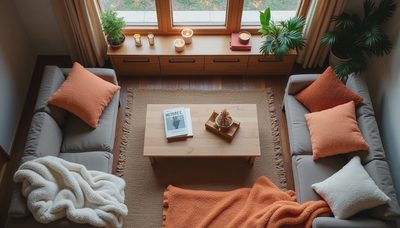
A cozy room is less about objects and more about what happens there. Ask what you actually do after work. Do you read, watch television, fold laundry, play cards, or eat takeout on the coffee table? Arrange the furniture around that behavior instead of copying a photograph with a sofa facing nowhere.
For a small living room, place seating close enough for conversation but leave a clear walking path. A coffee table should be reachable from the sofa without a dangerous forward lunge. If you read, put a lamp and a small surface beside the chair. If everyone watches television, mount it at a comfortable height or place it on a low console; do not hang it near the ceiling because one staged room did.
Layering helps, but leave breathing room. One basket, one stack of books, and one ceramic object on a cabinet will look intentional. Twelve little objects will look like you lost a bet at a flea market. Hygge decor is about ease, and visual clutter makes relaxing harder.
Use color without turning everything beige
Hygge decor does not require an all-neutral palette. Warm white walls can work beautifully with olive, cinnamon, navy, muted yellow, or brick red. In my own living room, the walls are a soft chalky white, but the curtains are faded green and the sofa has a tobacco-colored throw. Those warmer accents keep the room from feeling like a rental listing.
If you are nervous about color, begin with items that can move: pillow covers, art, curtains, or a painted stool. Spend $8 on sample-size paint before committing to a whole gallon. Paint a large piece of cardboard and look at it in morning, afternoon, and lamplight. Colors that seem gentle at noon can turn muddy at night.
Natural wood also adds color. A scratched walnut table, honey pine shelf, or oak frame brings variation without demanding a complete room makeover. I would rather see one imperfect wooden table than five new pieces pretending to be old.
A realistic weekend plan
On Saturday morning, remove anything broken, uncomfortable, or only present because you feel guilty throwing it out. On Saturday afternoon, change the bulbs and measure the room. Measure the rug, too. A rug that is too small will make even excellent hygge decor look disconnected.
On Sunday, shop your own home. Move the lamp from the bedroom, bring books out of storage, and test the chair in a different corner. Wash the blanket you already own before buying another one. If the room still needs something, choose one practical item under a firm budget, such as a $25 basket or a $40 used side table.
After living with the arrangement for a month, notice what gets used and what becomes visual noise. Cozy style is not a shopping list. It is a room that supports ordinary life: coffee, socks, conversations, bad weather, homework, and the occasional cat hair emergency. That is the part of hygge decor worth keeping.



Letters
No letters yet — be the first to write.