I learned how to hang a rug from a wall after buying a beautiful 1960s wool rug at the Brooklyn Flea and nearly destroying it with four picture hooks. The rug survived. My plaster did not. A wall-hung rug can make a room feel warm, graphic, and finished, especially when the floor is already crowded with furniture, children, and one extremely entitled cat. The trick is supporting the rug’s weight evenly instead of asking a few nails to perform structural engineering.
If you are figuring out how to hang a rug from a wall, start by identifying the rug’s material, weight, and construction. A thin cotton flatweave is forgiving. A dense wool or vintage kilim is not. The larger and heavier the piece, the more important it becomes to spread the load across the entire top edge. You want the rug displayed, not slowly stretched into a sad trapezoid.
Choose the right hanging method
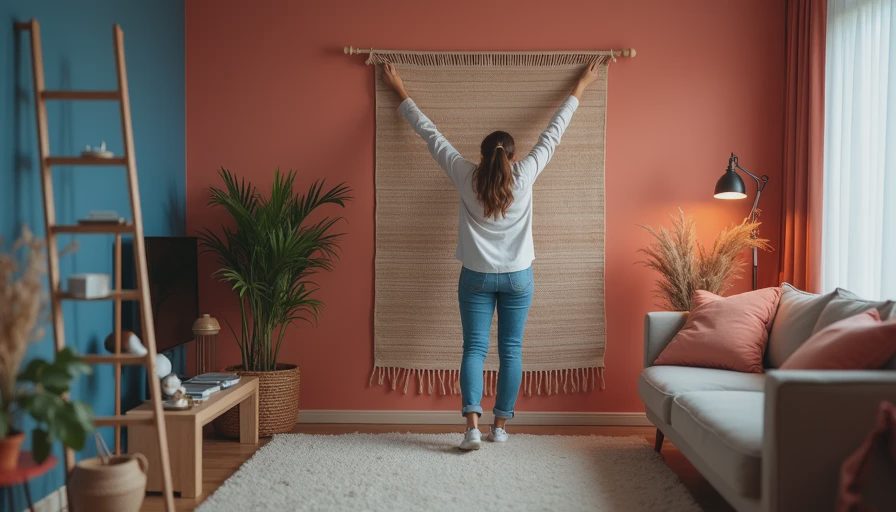
The cleanest method for most medium and large rugs is a fabric sleeve sewn to the back, paired with a wooden dowel or metal rod. A textile conservator would prefer a sleeve because it distributes pressure across a broad section of the rug rather than pinching individual fibers. I prefer it too, and not just because it sounds fancy. My 5-by-7-foot wool rug has hung this way for more than three years without a pulled corner or sagging top edge.
Ask a tailor or upholstery shop to sew a sturdy cotton canvas sleeve along the back, about two inches below the upper edge. The sleeve should be slightly wider than the rod and attached with horizontal stitching. Do not sew through the rug’s decorative face. A basic sleeve might cost $35 to $75, depending on the shop and fabric. If you sew, use a strong cotton canvas and loose, careful stitches that catch the backing without compressing the pile.
For a small, lightweight rug, a wooden magnetic poster hanger can work. Look for one with a wide gripping surface and a cord rated for more than the rug weighs. Magnetic hangers are convenient, but cheap versions can let go without warning. I would not trust one above a bed, sofa, or child’s reading corner unless the magnets are genuinely strong and the rug is very light.

How to hang a rug from a wall safely
First, weigh the rug if you can. A bathroom scale works: weigh yourself, then weigh yourself holding the rug, and subtract the first number. It is not laboratory equipment, but it will tell you whether you are hanging a three-pound cotton piece or a fifteen-pound wool beast. Add a margin of safety when choosing the rod, brackets, anchors, and wall hardware.
Next, measure the rug’s width and mark the bracket positions. For a wide rug, use three brackets rather than two. Place the outer brackets several inches inward from each side and the center bracket in the middle. The rod should extend past the sleeve, but not so far that the ends become visually distracting. A 48-inch rug commonly needs a 50-to-54-inch rod, while a 72-inch rug may need a 74-to-78-inch rod.
Use a level before drilling. I know this sounds obvious, but a rug hung one inch lower on one side makes the whole room look crooked, including furniture that was perfectly innocent. For drywall, screw into studs whenever possible. Where studs do not line up, use appropriately rated toggle bolts or heavy-duty hollow-wall anchors. Do not rely on a tiny plastic anchor because it came in the picture-hanging kit.
Hold the rod and rug at the intended height before making holes. Leave enough breathing room above a console or sofa, usually at least 6 to 10 inches, and avoid pressing the textile directly against a radiator or damp exterior wall. A little air behind the rug helps prevent trapped moisture and makes vacuuming or dusting possible.
Hardware that will not make you swear
For a rug under about 4 feet wide, a solid wood dowel, two metal brackets, and rated wall anchors may cost $20 to $45. Larger rugs need a stronger rod, sturdier brackets, and often a center support, bringing the hardware total closer to $50 to $100. Matte black hardware disappears nicely in a modern room, while unfinished oak looks better with a vintage textile. I would skip shiny brass unless the room already has brass doing useful work.
A curtain rod can be a practical choice if it is genuinely built to carry the weight. Check the manufacturer’s load rating, not just the diameter. Decorative rods often have hollow finials and flexible tubes that are fine for curtains but questionable for a heavy rug. A 1-inch steel rod with properly mounted brackets is a more reassuring choice than a pretty, flimsy rod with an oversized end cap.
If you rent, use a lightweight rug, a sleeve, and removable hardware only when the load rating is clear. Adhesive strips are not my recommendation for a valuable textile. They can work for a tiny cotton mat, but temperature changes, textured paint, and dust all reduce their grip. Your security deposit is not the place to conduct an adhesive experiment.
Prepare the rug before it goes up
Inspect the back for loose threads, old repairs, dust, or evidence of moth damage. Vacuum both sides using low suction and a clean upholstery attachment. Do not drag a rotating brush across an antique or loosely woven rug. If it smells musty, air it in a dry shaded spot for a day or two rather than spraying perfume onto the fibers.
Let rolled rugs relax flat before hanging. Heavy wool can need several days to stop curling at the edges. Never iron a vintage rug, and do not soak it unless you know the dyes are stable. I once used a damp cloth on a red border and watched the color migrate into the cream field. That was a $12 mistake, but it looked like a crime scene.
When installing the sleeve, make sure the rod sits inside it without forcing the fabric. A tight sleeve creates a ridge and puts unnecessary pressure on the upper rows. The rug should hang naturally from the sleeve, with its lower edge resting straight rather than bowing outward.
How to hang a rug from a wall in a rental
Renters have options, but they need realistic expectations. A 2-by-3-foot cotton rug can hang from a lightweight magnetic hanger or a pair of carefully chosen textile clips. For anything larger, ask the landlord about two or three small holes and patch them properly before moving out. That is usually less risky than trusting adhesive strips with a heavy object above your sofa.
If drilling is prohibited, display the rug over a sturdy ladder, quilt rack, or freestanding room divider instead. It will not be technically wall-hung, but the visual effect is close and the wall stays untouched. A narrow vintage rug draped over a ladder can look intentional; a large rug folded over a flimsy chair looks like laundry waiting for a decision.
Keep the bottom edge away from heaters, pet claws, and doors that swing into it. Gouache, my cat, treats anything within paw range as a personal invitation, so wall-mounted textiles in our apartment start at least 30 inches above the floor.
Common mistakes and the fix
The biggest mistake is using four nails along the top edge. The rug’s weight pulls downward, and those points eventually create stress marks, stretched fibers, or tiny tears. Another mistake is hanging the rug too high. The center of the artwork should relate to the furniture below it, not hover near the ceiling like it is trying to escape the room.
Do not put a valuable rug in direct, strong sunlight without protection. Natural dyes can fade, and even newer rugs can show uneven color where the edge is covered. Rotate the textile’s position occasionally if the room allows, and dust it gently every few months. If the rug begins to sag, remove it and fix the support rather than tightening the sleeve until the fibers complain.
For most homes, the sleeve-and-rod method is the clear winner. It costs more than nails but protects the textile, looks clean, and can be removed without leaving a row of holes. If you have been wondering how to hang a rug from a wall, that is my honest answer: support the whole width, use hardware rated for the real weight, and spend money on the part that prevents damage.
Taste is free. Everything else, we thrift.


Letters
No letters yet — be the first to write.