An indoor suspended chair can make a dead corner feel intentional without requiring a matching furniture set or a $4,000 sofa. I learned that after hanging one in our Fort Greene living room and discovering that the first location was spectacularly wrong. It blocked the bookcase, encouraged the cat to launch herself at the cushions, and made everyone entering the room walk sideways. The chair itself was fine. My measuring was not.
A hanging seat is part furniture, part architecture, so it needs more planning than dropping a chair beside a lamp. You have to think about the ceiling, the swing path, the weight of the people using it, and whether you actually have somewhere to put a drink. Done properly, it gives you a reading spot with personality. Done lazily, it becomes an expensive obstacle with a cushion.
Why an indoor suspended chair can be worth the trouble
The best indoor suspended chair creates a small room within a room. In our apartment, the successful version sits near a tall window, outside the main path between the kitchen and sofa. I can read there while the twins do homework, and the gentle movement makes the corner feel separate without adding a bulky divider. That is useful in an apartment where every square foot is already doing two jobs.
Prices range widely. A basic rattan or molded plastic seat can appear for $150 to $350, while a handmade hanging chair can run $700 or more. I would not automatically spend the higher amount. Facebook Marketplace, estate sales, and local vintage shops often have solid woven chairs for $100 to $250, though you need to inspect every joint and attachment point. A pretty bargain is not a bargain if the frame creaks when you sit down.
The visual trick is restraint. Let the chair be the unusual thing, then use a plain floor lamp, one substantial plant, and a washable cushion. I tried adding a fringe throw, a basket, and three small tables around ours. It looked less like a reading nook and more like a furniture yard sale. Removing two pieces fixed the entire corner.
Measure the ceiling, floor, and swing path first
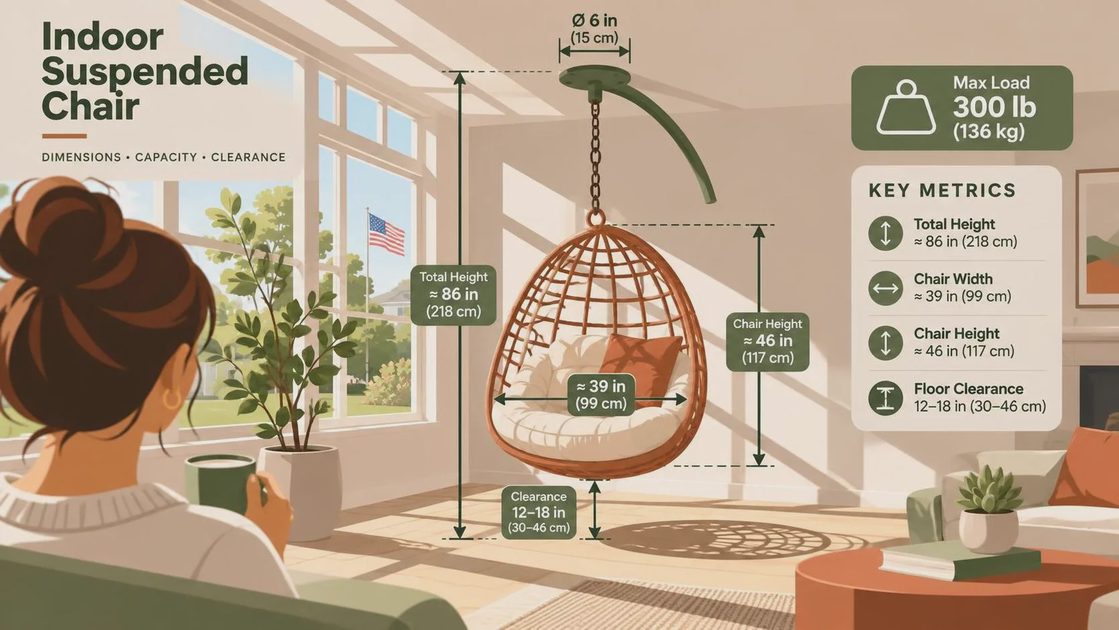
Before buying an indoor suspended chair, mark its footprint on the floor with painter's tape. Measure the chair's width, then add at least 18 inches on each side if the seat swings freely. Allow extra room in front for legs and a nearby table. A chair that fits on paper can still feel cramped when a person sits in it and the cushion expands.
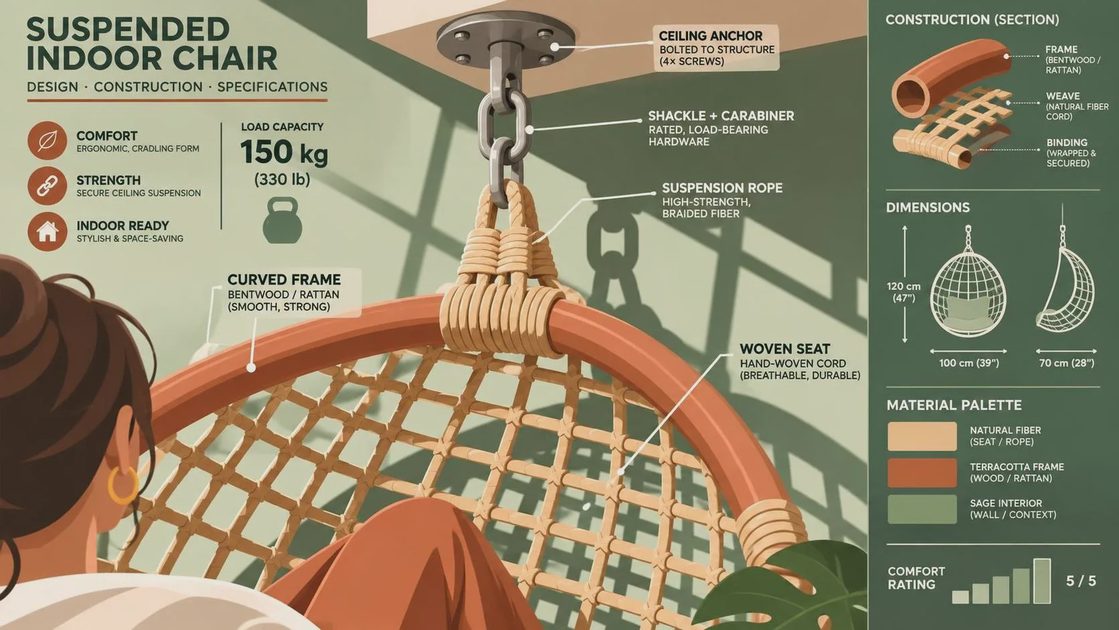
The ceiling is the serious part. A solid wood joist or properly installed structural blocking is different from drywall, plaster, or a decorative ceiling finish. The mounting hardware must be rated for the intended load, and the installation needs to account for dynamic movement, not just a motionless person sitting still. I am comfortable painting a ceiling and assembling flat-pack furniture; I am not comfortable guessing about structural support. Marcus handled the mount, and we hired a handyman for the final check because the ceiling was old plaster.
Do not use a random eye hook from a hardware drawer. Follow the chair maker's instructions and use hardware suited to the ceiling structure. If you rent, ask the landlord before drilling. A freestanding hanging-chair stand is less sleek, but it avoids a repair bill and can move with you.
Materials that survive actual family life
Rattan looks warm and works beautifully with old wood, but it can snag on rough clothing and may complain under hard use. Molded plastic or fiberglass-style shells are easier to wipe clean and often make more sense around children. Upholstered cocoon chairs feel wonderfully private, but their fabric can collect crumbs, cat hair, and the mysterious sticky residue that appears wherever an eight-year-old has been.
My indoor suspended chair has a woven body and a removable cotton-blend cushion. That combination has survived three months of reading, visiting children, and Gouache's determined attempt to claim it. The cushion cover goes into a cold wash and air-dries without drama. I would skip fixed upholstery unless you are willing to live with spot cleaning or pay for professional cleaning later.
Check the suspension rope or chain closely. Look for fraying, rust, crushed links, or a connector that does not close fully. Sit in the chair before buying secondhand, but do not bounce in it like you are testing a trampoline. Ask how it was installed, how long it was used, and whether the original hardware is included. If the seller says, “It was fine in my sunroom,” that is information, not a safety certification.
Styling an indoor suspended chair without making it childish
The easiest way to keep an indoor suspended chair from looking like a playroom prop is to give it adult neighbors. Pair a black or natural wood frame with a large ceramic lamp, a substantial rug, or artwork with crisp edges. Avoid surrounding it with tiny decorative objects. The chair already has movement and visual interest; it does not need a collection of miniature signs announcing that this is a cozy corner.
Color matters more than brand. A cream cushion against a warm terracotta wall feels calm, while a rust cushion against pale blue can look graphic and deliberate. If your room is already full of pattern, choose a solid seat cushion. If the rest of the room is neutral, a striped or block-printed cushion gives the chair a reason to exist.
I also recommend a small side table with a broad, stable base rather than a skinny drink table. The first one I used tipped when Felix reached for a book, sending tea under the sofa. The replacement cost $28 at a thrift shop and has a lower center of gravity. That is the kind of upgrade that improves a room more than another decorative pillow.
Common mistakes I would avoid
The biggest mistake is buying before deciding who will use the chair. A compact basket seat may be perfect for one adult reading, but uncomfortable for a taller person or impossible for two children who insist on sharing everything. Measure the inside seat depth, not just the outside shell. If the product listing only gives exterior dimensions, ask the seller for interior measurements.
Another mistake is hanging it too high. You want enough clearance below the chair for a comfortable landing, not a dramatic leap. Adjustability helps, especially if different people use the seat. Leave enough space above the chair for the suspension hardware and avoid placing it directly beneath a ceiling fan or near a door that can swing into it.
Finally, do not treat inspection as a one-time task. Check the attachment, rope, chain, and chair joints after the first week, then every few months. Movement gradually exposes loose connections. If anything creaks, shifts, or looks worn, stop using it until the cause is clear.
My practical buying checklist
When I shop for an indoor suspended chair, I start with the room rather than the photograph. I measure the ceiling height, mark the swing area, and identify the structural mounting point. Then I set a hard budget that includes hardware, installation, and a washable cushion. A $220 marketplace chair can become a $450 project once those extras arrive.
I look for a chair with replaceable cushions, accessible hardware, and a shape that supports my back without forcing my knees toward my chest. I prefer neutral woven textures because they work with thrifted furniture and do not announce a trend six months later. I skip anything with brittle cord, unexplained repairs, or a seller who cannot answer basic questions about age and use.
An indoor suspended chair is not necessary furniture, and that is exactly why it can be fun. It gives a room a little movement and gives you a place to sit that is not the sofa. Just install it like serious furniture, style it like part of your home, and do not let a beautiful photograph bully you into ignoring measurements. Taste is free. Everything else, we thrift.



Letters
No letters yet — be the first to write.