If you are searching for the best wood for cabinets, I am guessing you have already fallen into the internet’s favorite trap: seventeen tabs open, twelve conflicting opinions, and one suspiciously perfect kitchen that probably cost more than your apartment. I have painted, repaired, thrifted, and lived with enough cabinets to know that the “best” wood depends on your budget, your finish, and whether your household treats drawers like gym equipment.
My short answer is this: maple is my practical favorite for painted cabinets, white oak is the prettiest choice for a natural finish, and birch is the budget wildcard. Cherry is beautiful, but I would not pay a premium for it unless you genuinely like how it changes color over time. The best wood for cabinets is the one that suits the job instead of the one currently dominating renovation videos.
What cabinet wood actually has to do
Cabinet wood needs to survive more than looking nice in a listing photo. Doors get opened with wet hands. Drawers collect crumbs. A lower cabinet near the dishwasher gets blasted with heat and occasional steam. If you have children, someone will eventually use the cabinet face as a balance bar. In my house, that someone was Felix, and the hinge lost the argument.
Solid wood is strong, but “solid wood cabinets” can be a misleading phrase. Many well-made cabinets use solid wood for doors and face frames, with plywood boxes and engineered panels for stability. That is not automatically cheap construction. Plywood often stays flatter than a wide solid-wood panel, especially as humidity changes.
The important questions are whether the joints are sturdy, whether the finish is even, and whether the hinges and drawer slides can be adjusted. A gorgeous species with flimsy hardware is still a bad cabinet. I would choose a plain maple cabinet with soft-close undermount slides over fancy walnut doors attached to particleboard boxes that swell near the sink.

Maple: my painted-cabinet workhorse
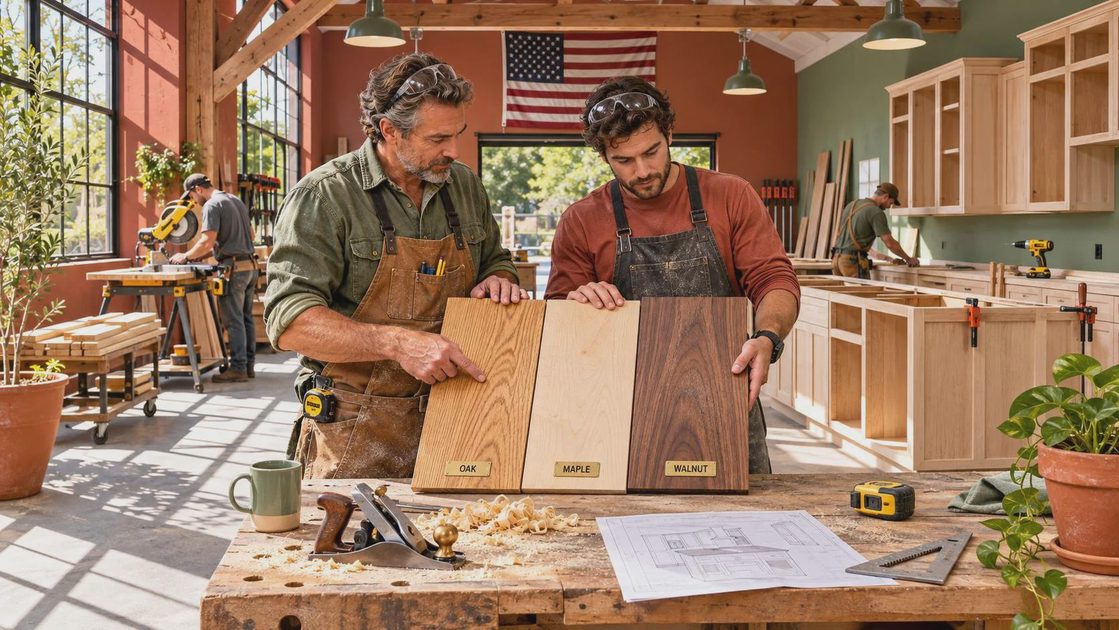
Maple is dense, fairly smooth, and usually consistent in color. That makes it one of the best wood for cabinets when your plan involves paint. Its tight grain does not compete with a soft white, deep green, or the dusty blue I used in our kitchen. It can still show subtle grain under paint, but a good bonding primer and sanding handle that without drama.
Maple is also commonly available, so replacement doors and matching trim are easier to find than with unusual species. Depending on construction and location, maple doors can range from roughly $25 to $80 each, while a complete cabinet run can climb into the several-thousand-dollar range. The material is not cheap, but it is predictable.
One warning: maple can look blotchy when stained, particularly with darker colors. If you want a walnut-like finish, test an actual door rather than trusting a tiny sample. My first maple sample looked like a damp cardboard box after stain. I painted it and moved on.
White oak: beautiful, but not a bargain
White oak is my pick when you want the wood itself to be visible. It has a clear, lively grain and enough visual texture to make a simple slab door feel intentional. It works especially well with warm white walls, aged brass, soapstone, or the kind of vintage runner you find after three hours of searching Marketplace.
White oak is hard and durable, but it costs more than maple or birch in many markets. Rift-sawn or quarter-sawn oak costs even more because of the way the boards are cut. That dramatic straight grain is lovely, but you are paying for the cutting method as much as the species.
The best wood for cabinets is not always the most expensive wood for cabinets. If white oak is out of reach, look for oak veneer over a stable plywood box. A good veneer can give you the visual effect without requiring every cabinet component to be a thick slab of premium lumber. Just inspect the edges and finish carefully; thin, poorly applied veneer can chip.
Birch, cherry, and walnut: where they fit
Birch is often the sensible budget choice. It is light in color, relatively hard, and frequently used for plywood cabinet boxes and affordable drawer fronts. Birch can be painted, though its grain and occasional mineral streaks may need extra primer. It also accepts light stains more readily than maple, but darker finishes still deserve a test board.
Cherry has a warm reddish-brown color that deepens with light. It is smooth, workable, and genuinely lovely, but its changing color is part of the deal. A new cherry kitchen may look lighter and pinker than the sample you saw online. If you want a permanently pale wood, cherry will annoy you.
Walnut is rich, dark, and expensive. I love walnut as an accent, island face, or small run of drawers. I do not recommend using it everywhere simply because a designer says it will make the room feel “luxurious.” In a small kitchen, a walnut island can do the visual work of a much larger renovation for less money.
How finish changes the right choice
Paint changes everything. For painted doors, prioritize a stable panel, smooth surface, and good construction over dramatic grain. Maple, birch, and poplar are common choices, although poplar is softer and can dent more easily. If the doors are routed or detailed, inspect the corners for fuzzy fibers before buying.
For a clear finish, prioritize grain and color. White oak gives you a strong pattern, walnut gives depth, and cherry warms up with age. Red oak has a more pronounced, sometimes orange-leaning grain. That is not bad, but it can fight with cool gray floors and blue paint. The sample door belongs in your actual room for at least a day; morning light and overhead bulbs can make the same wood look like two different materials.
Also think about maintenance. Glossy finishes show fingerprints. Very matte finishes can look beautiful but may be less forgiving around greasy handles. A wipeable conversion varnish or durable polyurethane matters more than a trendy label. Ask what finish system is used and how damaged doors can be touched up.
My budget-friendly buying checklist
Before choosing the best wood for cabinets, do this in order:
- Decide whether you want painted or natural wood doors. Do not choose a species first and hope the finish works later.
- Order or borrow a full-size door sample. Tiny squares hide grain, seams, and color shifts.
- Look at the cabinet box. Plywood sides and backs are generally preferable to thin particleboard, especially near plumbing.
- Open every drawer in a showroom or used listing. Listen for grinding, watch for wobbling, and check whether the slides extend fully.
- Inspect the hinge screws and mounting plates. Stripped holes are a repair bill disguised as a bargain.
- Price the whole project, including fillers, toe kicks, panels, delivery, hardware, primer, and paint. Doors are not the entire kitchen.
- Buy one replacement door if you are matching existing cabinets. Wood batches and finishes vary more than online photos suggest.
For a small rental-friendly upgrade, replacing only the doors and painting the existing boxes can cost around $500 to $2,000, depending on the number of cabinets and whether you hire help. A full custom kitchen can run far beyond that. You do not need the second option to make the room look intentional.
My final pick for a real apartment
For a painted kitchen, I would choose maple doors with plywood boxes and quality hardware. For a natural finish, I would choose white oak veneer or solid oak where the budget allows. For a thrifted or semi-custom project, birch is the practical compromise, especially when the cabinet layout matters more than a prestige wood name.
The best wood for cabinets should survive your actual life, not just photograph well before move-in day. Spend on construction, hinges, drawer slides, and a finish you can clean. Save on exotic species unless the wood itself is the feature you cannot stop thinking about. Taste is free. Everything else, we thrift.

Letters
No letters yet — be the first to write.