The first time I bought vintage Pfaltzgraff dishes, I was standing in a Brooklyn thrift shop holding four cereal bowls and doing the math in my head. Six dollars for the stack. The bowls had a pleasing weight, a brown rim, and exactly the kind of imperfect blue flowers that make a table look like people actually eat there. I bought them, naturally. Vintage Pfaltzgraff dishes are one of my favorite low-cost ways to make a kitchen feel personal without buying a matching dining set from a big-box store.
They are not all rare, and they are not all worth the price someone writes on a masking-tape label. That is good news. You do not need a collector's budget. You need to recognize useful patterns, inspect the finish, and walk away when a seller is charging antique-mall money for six chipped plates.
Why vintage Pfaltzgraff dishes still work
Pfaltzgraff made a huge range of American stoneware and earthenware patterns over many decades, so the look is broad rather than locked to one era. Some sets have the earthy brown-and-cream palette people associate with Heritage. Others bring in blue, green, burgundy, or hand-painted florals. The common thread is visual warmth: slightly irregular edges, substantial handles, and colors that behave well with wood, linen, and plain white plates.
That warmth matters in a small apartment. My dining area is really a passage between the living room and kitchen, so a formal table setting would look ridiculous. A stack of vintage Pfaltzgraff dishes on an open shelf gives the room color even when the table is empty. At dinner, I mix the older pieces with plain white stoneware from IKEA. The result looks intentional, not like I panic-bought a twelve-piece set before Thanksgiving.
The other practical advantage is replacement. Because so many pieces were produced, you can often find individual mugs, salad plates, or serving bowls instead of replacing an entire service. The pattern name is usually printed or impressed on the underside, though some older pieces have only a maker's mark or no useful label at all.

The patterns and pieces worth hunting
If you are starting from scratch, do not begin with a complete place setting. Begin with the pieces you will use weekly. Four dinner plates and four cereal bowls are more useful than one enormous platter that lives behind the toaster. I learned this after buying a dramatic serving dish for $18 at a flea market. It was beautiful, but too shallow for pasta and too wide for my cabinets. It became a key tray. A $3 bowl would have done the job.
Look for dinner plates, cereal or soup bowls, mugs, and small serving bowls first. Mugs are especially good thrift targets because they make a breakfast shelf look finished and usually cost between $2 and $6 each. Dinner plates commonly land around $3 to $8 at thrift stores, while flea-market or online prices can climb to $10 or $15 for clean, desirable examples. A full set should not automatically cost more per piece; sellers often bundle ordinary pieces because they want the shelf space back.
Patterns with restrained colors are easiest to mix. A blue rim can sit beside white, gray, or faded red. Loud multicolor florals are fun, but I would buy two or three accent pieces rather than a whole tableful unless you genuinely love the look. Your dishes should support dinner, not shout over it.
How to check vintage Pfaltzgraff dishes before paying
Turn every piece over and inspect the foot ring. Look for hairline cracks, chips along the lip, glaze crazing, and dark marks that do not wash away. Run a clean finger around the rim. A tiny rough spot that looks harmless in a store can become the chip that cuts someone during cleanup. Hold plates at eye level under bright light; cracks often appear as thin lines near the center or handle.
Crazing means a network of fine cracks in the glaze. It can be part of the age and character, but it also traps stains and makes a piece less appealing for daily use. I use mildly crazed dishes for dry foods or display, not for soup that sits in them for twenty minutes. Never buy a plate with an active crack and assume a dishwasher will fix it. It will not.
Older ceramic glazes can also raise questions about lead, especially when pieces are worn, chipped, or intended mainly for display. If you cannot verify the piece's history and want zero uncertainty, use it decoratively or choose newer, clearly labeled tableware for everyday meals. Do not microwave damaged pieces, and do not use a vintage dish for acidic food if the surface is badly worn. A pretty plate is not worth ignoring basic kitchen safety.
How to style the collection without making your table look themed
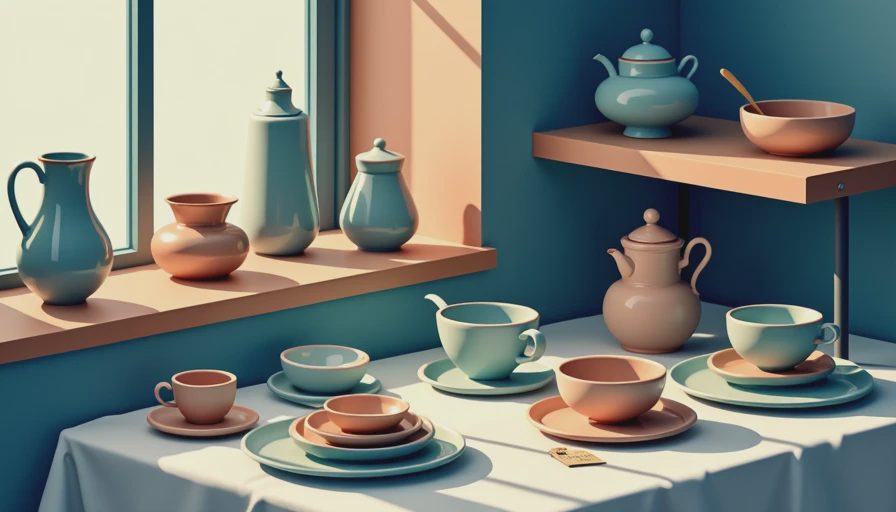
My strongest opinion: do not buy every piece in one pattern. A table covered in matching brown stoneware can look dated in the wrong way, especially under warm overhead lighting. Instead, repeat one color and vary the shapes. Pair a floral dinner plate with a plain cream bowl, then add blue cloth napkins or a small glass tumbler. The repeated color does the organizing for you.
For everyday dinners, I use vintage Pfaltzgraff dishes with modern flatware and clear drinking glasses. That contrast keeps the table from becoming a time capsule. For a weekend brunch, I stack two patterns on a wooden board and add a thrifted butter dish. No charger plates, no complicated centerpiece, and no flower arrangement that blocks everyone's view.
Open shelving needs restraint too. Leave gaps between stacks so the collection can breathe. Put the least precious pieces at the front and the serving bowls higher up. If children are reaching for breakfast, use the sturdy mugs and bowls on the lowest shelf. My twins have broken exactly one bowl in three years, which is a better record than I expected from a household that treats the kitchen counter as a science lab.
What I would pay and when I would walk away
For an ordinary dinner plate in good condition, I am comfortable at $3 to $6. I might pay $8 for a pattern I have been trying to match, but I would want a clean rim and no heavy staining. A mug under $5 is usually a sensible buy. A serving piece needs to be genuinely useful before I spend $12 to $20, because large dishes are harder to store and easier to regret.
I would walk away from a seller asking $40 for four common plates simply because the word vintage is on the tag. I would also skip incomplete sets with several damaged pieces, even if the pattern is charming. Replacement hunting can be fun, but it becomes a second job when you are trying to find six dinner plates, four bowls, and a lid in the same shade of brown.
Before buying online, ask for photographs of the front, back, rims, and any maker's marks. Confirm the exact quantity and ask whether there are utensil scratches or repaired cracks. Shipping heavy stoneware can erase a bargain quickly, so compare the delivered total with local thrift prices.
A simple starting plan for your own table
Start with four dinner plates in a pattern you can live with, not the rarest example you found after an hour of searching. Add bowls from the same line only when they appear at a fair price. Then bring in one contrasting color through mugs or salad plates. This gives you a flexible table before you have a crowded cabinet.
My current setup mixes four blue-rimmed plates, three cream bowls, two floral mugs, and a plain white serving platter. Nothing matches perfectly, which is precisely why it works. The table looks like it accumulated through actual life instead of arriving in one cardboard box.
Vintage Pfaltzgraff dishes are worth hunting because they offer color, weight, and history without demanding a precious attitude. Inspect them carefully, pay thrift prices when the condition deserves thrift prices, and use the pieces in a way that fits your real kitchen. Taste is free. Everything else, we thrift.



Letters
No letters yet — be the first to write.