If you are searching for how to get the smell of urine out of sofa cushions, I am guessing you have already found the damp spot by kneeling on it. I have been there, thanks to a child, a nervous cat, and one regrettable weekend with a foster kitten. The good news is that most accidents do not require throwing out a perfectly decent sofa. They require patience, an enzyme cleaner, and the discipline to stop scrubbing before you grind the mess deeper into the foam.
The odor comes from residue left behind as urine dries. A scented spray can make the room smell like lavender bathroom cleaner and urine, which is not an improvement. You need to remove the residue from the fabric, cushion filling, and sometimes the frame beneath it.
Before you clean, find the actual source
Start by removing every cushion, pillow, throw, and washable cover. Smell each piece separately near the seams and zipper. Urine can travel farther than the visible mark, especially when a cushion has a loose weave or thick batting. Check the deck under the cushions, the front edge, and the floor beneath the sofa. If the smell seems strongest at one corner, do not assume the stain is directly above that spot.
A black light can help locate old accidents, but you do not need to buy a special gadget for one cleanup. In a dark room, use your nose and a flashlight held close to the fabric. Mark suspicious areas with removable painter's tape. Before learning how to get the smell of urine out of sofa material, check the care tag. W means water-based cleaning is allowed, S means solvent-based cleaner only, WS allows either, and X means vacuuming is the safest home treatment. If the tag says X, do not soak the cushion because the upholstery may develop permanent rings or shrinkage.
Vacuum first. This removes crumbs, cat hair, and grit that would otherwise turn into muddy paste. Test any cleaner on the back edge or underside, then wait until it dries. A color change that looks minor while wet can become very obvious in daylight.
The method that actually removes the odor
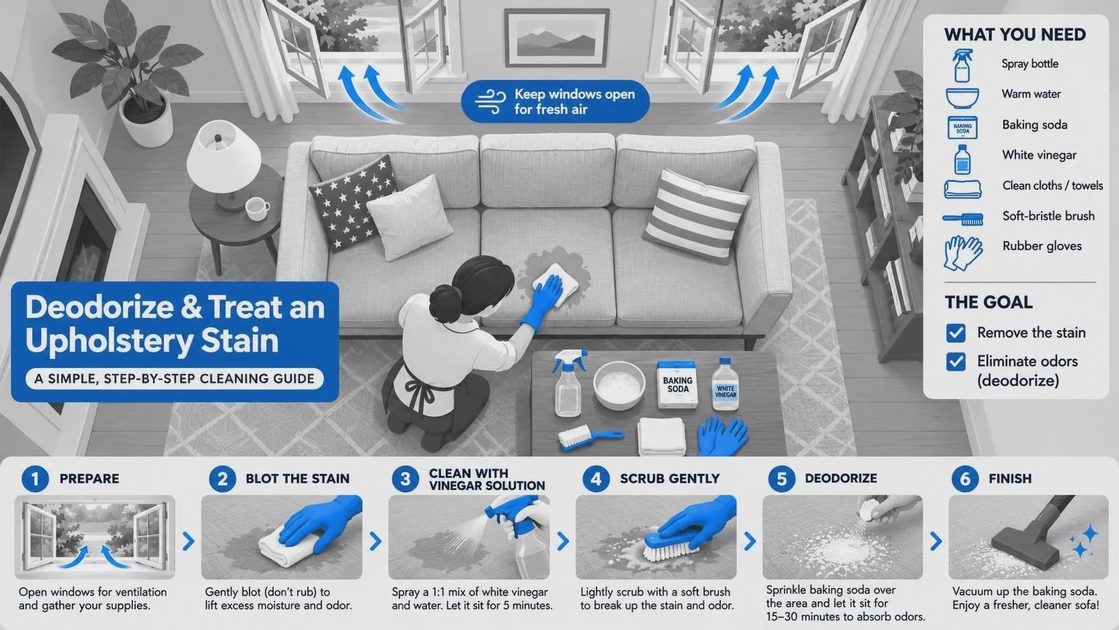
For washable upholstery, gently blot fresh urine with white towels. Press down with your palm or stand on the towel for a few seconds; do not rub back and forth. Replace the towel as it becomes wet. With an old stain, lightly dampen the area with cool water and blot again to pull out some residue. Avoid hot water, steam, bleach, and ammonia. Heat can set odor, while bleach and ammonia can damage fibers and create harsh fumes. Ammonia-based products are especially unhelpful because urine already contains ammonia-related odor compounds.
Now apply an enzyme cleaner made for pet urine or organic stains. Nature's Miracle, Rocco & Roxie, and Biokleen Bac-Out are widely available options, but the label matters more than the brand name. The product needs enough contact time to work. Mist or pour only as much as the upholstery label allows, then let it sit according to the instructions. Enzymes are not magic perfume; they need time to break down the proteins causing the smell.
Blot from the outside of the mark toward the center. That keeps the wet area from spreading. Place folded towels over the spot and weigh them down with a clean baking sheet or a stack of books protected inside a plastic bag. Leave them for several hours, replacing damp towels once or twice. This is how to get the smell of urine out of sofa padding instead of simply making the surface smell clean for an afternoon.
Let the cushion dry completely in moving air. A fan pointed across the surface works better than blasting it with a hair dryer. Open a window if the weather allows, and stand the cushion on its edge so both sides can breathe. Do not put a cover back on while the foam is damp. Trapped moisture creates a mildew problem, and mildew is a much more expensive personality to deal with.
What to do when the smell is inside the cushion
If the cover zips off, remove it and wash it according to the tag. Do not assume the foam is clean because the cover is. Foam acts like a sponge, and an accident that reached the interior can keep releasing odor whenever humidity rises. Apply enzyme cleaner carefully to the affected section of foam, giving it enough time to work without flooding the entire cushion. Press it between towels to remove moisture, then dry it upright with a fan.
For a removable foam insert, I usually give it two treatment cycles rather than one dramatic soaking. The first cycle pulls out the surface residue. After drying, the second targets the odor that becomes noticeable when the room warms up. This slower approach is how to get the smell of urine out of sofa cushions without leaving them misshapen or waterlogged.
If the cushion has down, feather, or thick cotton batting, be more conservative. Those materials hold moisture and can clump. A professional upholstery cleaner is sensible when the liquid reached the inner core, the accident covers a large area, or the cover is marked S or X. Spending $100 to $250 on targeted cleaning can be cheaper than replacing a sofa you otherwise love, particularly if it is a solid vintage frame.
When the sofa frame or floor is involved
Sometimes the cushion is innocent and the wooden frame underneath is the culprit. Wipe sealed wood with a lightly damp cloth and a mild soap solution, then dry it promptly. Do not drench unfinished wood or particleboard. If the urine reached the underside, inspect the dust cover and staples. A damaged dust cover can hold odor against the frame, and replacing that fabric is often a straightforward upholstery repair.
Check the floor, wall, and baseboard behind the sofa too. A cat or puppy may have returned to the same area because the original scent remains below the furniture. Enzyme cleaner can be used on sealed hard flooring after a spot test, but never mix cleaners. Keep pets and children away until the area is dry and ventilated.
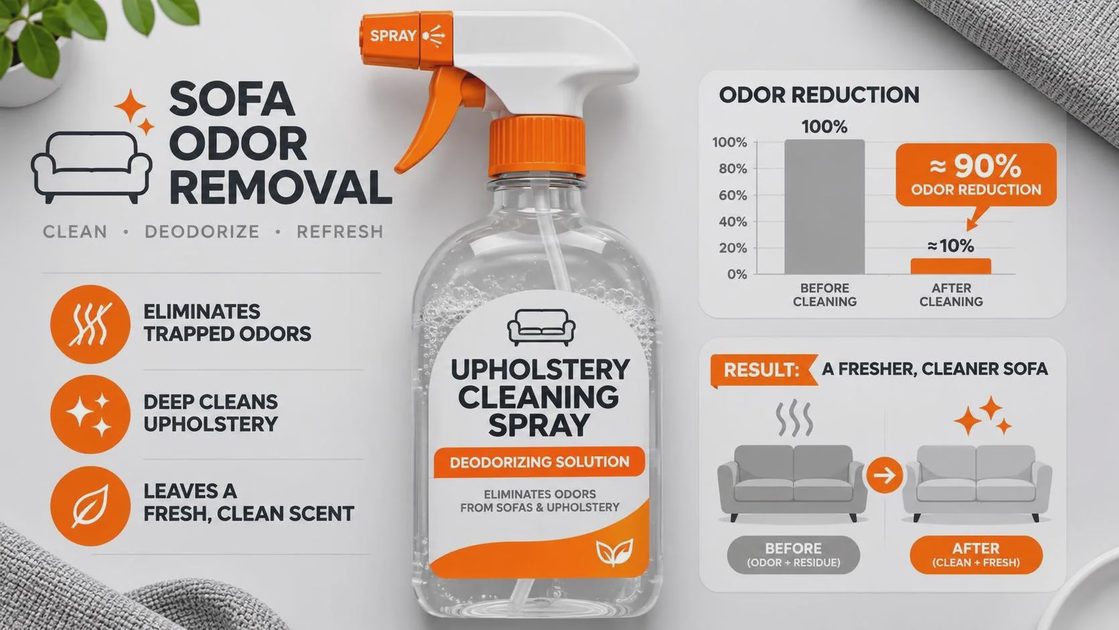
This is also the point where many people search again for how to get the smell of urine out of sofa fabric and reach for baking soda alone. Baking soda can absorb some surface odor, but it does not dissolve the residue inside foam. Use it only after the sofa is clean and dry, sprinkle a thin layer, leave it overnight, and vacuum thoroughly. It is a finishing step, not the treatment.
How to prevent the second accident
Once the sofa is dry, put the room back together slowly. Sit on the cushion and smell it at close range, then check again after the room has been closed for a few hours. If the odor returns, moisture or residue is still inside. Repeat the enzyme treatment rather than adding fragrance. A $12 washable waterproof cushion protector under the cover is less glamorous than a new throw pillow, but it saves a lot of panic.
For pets, clean the nearby floor and make the litter box or outdoor route easier to reach. For children, use a washable blanket over the favorite sitting spot while you are dealing with illness, nighttime accidents, or potty training. Keep enzyme cleaner, white towels, and a trash bag together in a small under-sink bin so the next cleanup starts immediately.
My honest answer to how to get the smell of urine out of sofa upholstery is simple: remove the residue, not just the scent. Blot, use an appropriate enzyme product, allow real dwell time, and dry every layer completely. Skip bleach, steam, perfume, and frantic scrubbing. I have rescued thrifted sofas with worse problems than this, including Bernice, the $75 green velvet sofa that has survived twins, a cat, and one leaky moving truck. Taste is free. Everything else, we thrift.

Letters
No letters yet — be the first to write.