An odd shaped carpet can rescue a room that standard rectangles make look faintly ridiculous. I learned this in our Fort Greene brownstone, where the living room has a chimney breast, one diagonal wall, and a radiator placed exactly where a sensible rug would want to go. My first rug was a conventional 8-by-10, and it looked like it had been dropped from a helicopter. The room was not the problem. The shape was.
The trick is to stop treating an unusual rug as a compromise. It can define a reading corner, soften a narrow landing, or make a tiny dining area feel intentional. But there is a line between interesting and “did that come with the apartment?” I have crossed it several times, including with a $35 braided oval from a church sale that shed jute all over my black socks. Here is what actually worked after living with these choices for months, not just photographing them for an afternoon.
Start with the Room, Not the Rug
Before shopping for an odd shaped carpet, trace the usable floor area with painter’s tape. Do not measure only the widest wall. Mark the legs of the sofa, the swing of the door, the path to the window, and any furniture that must stay accessible. In our living room, a kidney shape looked promising online, but the tape outline showed that its narrow end would sit under the radiator. That was a no.
Measure in three directions: the longest span, the widest span, and the smallest passage left around it. Leave about 18 inches of clear walking space where people regularly pass, unless the room is exceptionally tight. For a dining table, the rug needs enough room for chairs to slide out without catching an edge. A six-foot round rug can look generous until four chairs are pulled back; then two legs are suddenly on the floor.
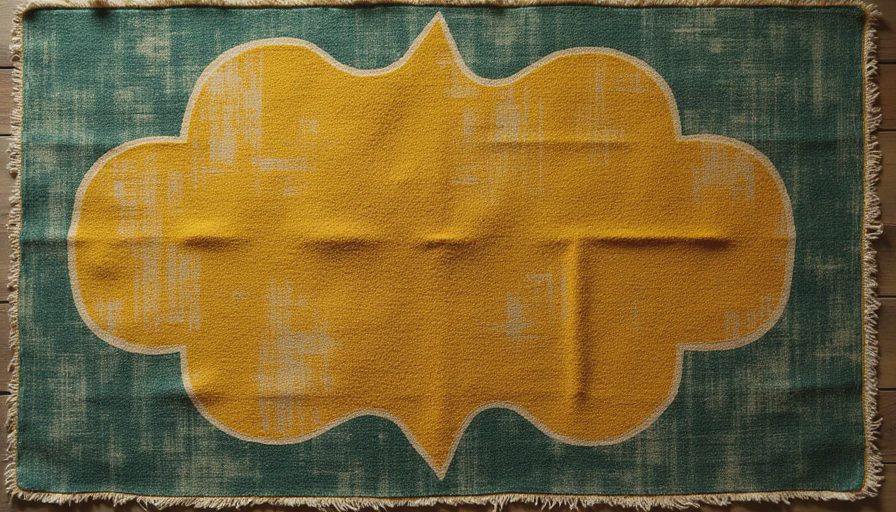
Odd shaped carpet options work best when their outline repeats something already in the room. A round rug can echo a circular table or pendant. A runner with a clipped corner can follow a stair landing. A crescent shape can make a bay window feel like a separate little room. The shape should have a job, not simply be strange for the sake of being strange.
The Shapes That Earn Their Floor Space
My favorite odd shaped carpet is the oval. It is forgiving, friendly, and less visually aggressive than a perfect circle. I used a faded red-and-cream oval under our oval dining table, and the rounded ends made the table fit without the corners fighting the nearby bookcase. I paid $60 at a neighborhood estate sale. The previous owner had apparently kept it in a formal dining room, so it had good wool pile and one coffee-colored stain that disappeared under a chair.
Irregular geometric rugs are useful in open-plan spaces because they create a boundary without looking like a hard wall. A jagged-edged flatweave can separate the sofa from the desk when both sit in one long room. Look for a shape with at least one calm side. If every edge is busy, the rug starts competing with art, upholstery, and whatever toys your children have abandoned under the coffee table.
Animal hides and faux hides are another option, but I am picky here. A hide can work beneath a small writing desk or in front of a fireplace. It usually looks lost under a full sofa arrangement, and synthetic versions tend to curl at the edges. I had one faux cowhide for eight months before the backing cracked near the radiator. It went to the donation bin, where I hope it is now living a quieter life.
How to Shop Without Paying Designer Prices
Search terms matter. “Odd shaped carpet” brings up more useful results than “unique rug,” which is the internet’s way of showing you beige rectangles with a slightly wavy border. Try oval, scalloped, kidney, octagonal, abstract, half-moon, and irregular wool rug. On Facebook Marketplace, search misspellings and broad terms such as “old floor covering.” Sellers often do not know what shape they have, but they do know it is too large for their current home.
I inspect the back before buying. A rug should not smell strongly of mildew, feel damp, or have brittle latex flaking from the underside. Fold one corner and check for moth damage, especially on wool. Small worn areas can be charming; a bald path through the middle means the rug has already told you where everyone walks. For used rugs, I budget $25 to $70 for professional cleaning, depending on size and material. That is still preferable to spending $400 on something that only looks old because a machine printed a distressed pattern on it.
For new options, washable brands such as Ruggable can be practical in a kitchen or under a messy craft table, although their unusual shapes are more limited and the low pile does not have the softness of wool. IKEA has inexpensive round and sheepskin-style options, while Target frequently carries small geometric rugs in the $30 to $150 range. I would rather buy a modest, well-fitting rug than a larger bargain that blocks the door.
Layering Makes a Weird Shape Make Sense
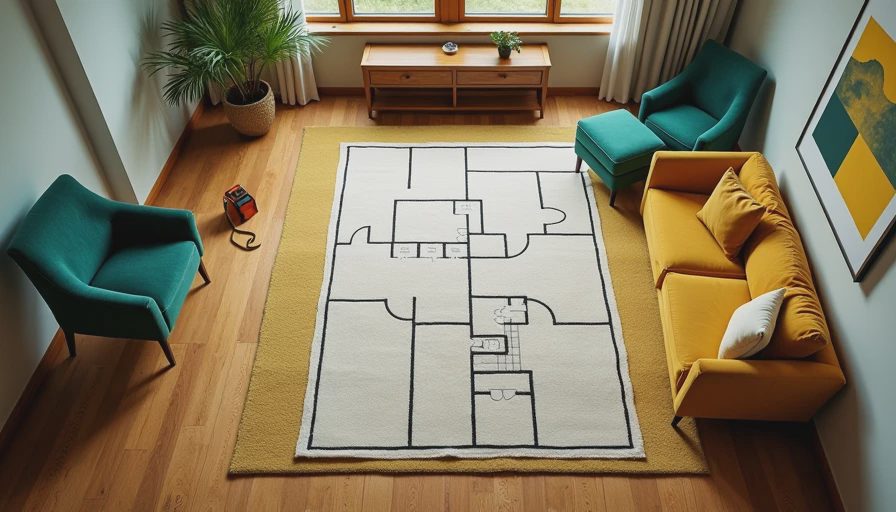
Layering is my favorite fix when an odd shaped carpet is too small to anchor all the furniture. Put a larger, quiet base underneath it: natural jute, flat cotton, or a low-pile neutral wool. Then place the unusual rug where it matters, such as beneath the front legs of a chair or in the center of a conversation area. The bottom rug establishes order; the top rug gets to have a personality.
There are rules, though. Keep the bottom layer mostly plain and make sure both rugs lie flat. A thick shag under a curled vintage wool rug is a trip hazard, especially around children. I use rug pads under both layers when the floor is wood. A felt-and-rubber pad costs more than the thin foam kind, but it stays put and protects the finish. Trim it so it sits several inches inside the rug edge; visible pad is not a design detail.
Color also matters more than shape. If the rug is a loud rust, blue, and pink, repeat one of those colors in a pillow, vase, or small artwork. Do not scatter all three around the room like evidence. My red oval works because the room already has a red thread in the curtains and a painted red stripe on a bookshelf. The connection is quiet, which is the whole point.
Common Mistakes I Have Made
The first mistake is buying by photograph. Wide-angle listing photos make a small rug look heroic. Ask for measurements, request a picture beside a familiar object, and use tape on your own floor. The second mistake is ignoring thickness. A high-pile odd shaped carpet can catch under a door or make a dining chair wobble. The third is placing a tiny rug directly in the middle of a large room with no furniture touching it. That creates a lonely island, not a focal point.
I also used to assume every corner needed to align with a wall. It does not. In a narrow apartment, turning an oval slightly can open a walking route and make the layout feel less rigid. The rug should support how people move, not satisfy an imaginary grid. If an edge sits near a wall, leave enough breathing room to clean and avoid trapping dust behind furniture.
My Practical Shopping Formula
For a living room, I start with the largest piece of furniture and ask which legs should sit on the rug. For a bedroom, I measure from the nightstands to the foot of the bed, then subtract for the walkway. For an entry, I choose a runner or half-moon that leaves the door swing clear. Those simple decisions narrow the search far faster than browsing every “statement rug” on the internet.
An odd shaped carpet deserves a room with a little patience. Live with painter’s tape for two days. Walk the route while carrying laundry. Pull out the dining chairs. Let the cat attack the tape, because Gouache has opinions about every home improvement project. If the taped shape still makes sense after ordinary life gets involved, shop for that shape.
My final position is firm: do not buy an unusual rug just because the listing calls it special. Buy it because it solves a real proportion problem, protects a high-traffic floor, or gives a dead corner a purpose. Taste is free. Everything else, we thrift.

Letters
No letters yet — be the first to write.