The triangular closet under a staircase is where good intentions go to die. Coats land in a heap, vacuum attachments vanish forever, and one lonely board game somehow blocks the door. I have lived with this exact nonsense, so these under stairs closet storage ideas come from real trial and error, not a showroom where nobody owns a mop.
The first thing I got wrong was treating the whole space like one large closet. It is not. The ceiling height changes, the access is usually awkward, and a deep shelf can turn three feet of usable storage into a black hole. The fix is to divide the area by what you actually reach for: daily items near the door, occasional items in the deepest or lowest section, and anything heavy down near the floor.
Start by Measuring the Awkward Parts
Measure the width, depth, and height at several points. Do not measure only the tallest section and assume the rest will cooperate. Mark the lowest ceiling point, the door swing, baseboards, outlets, and any pipes or HVAC vents. A quick sketch on graph paper is enough; mine looked like a ransom note and still saved me from buying the wrong shelves.
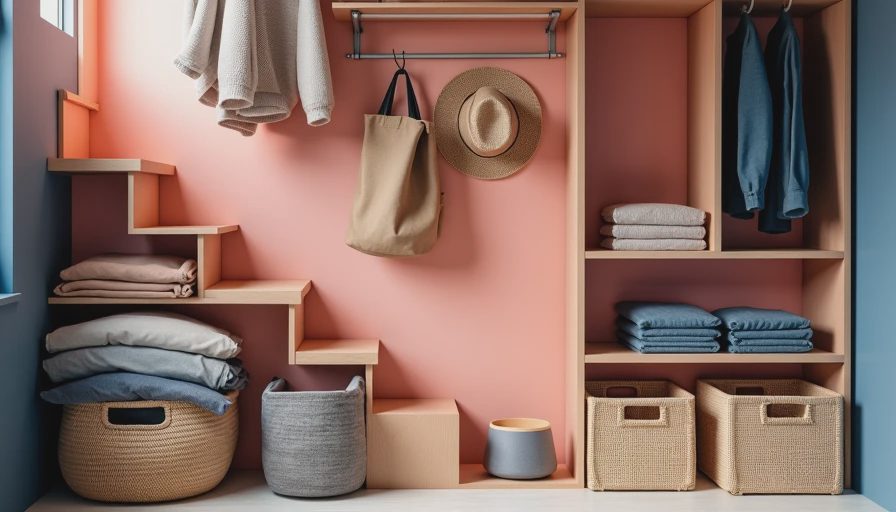
For a rental, use freestanding pieces that can be removed without leaving a renovation-shaped scar. A narrow bookcase, a three-drawer pine chest, or two stacked cube units can create useful zones. For a house you own, shallow wall-mounted shelves are worth considering, but leave enough clearance for coats and cleaning tools. A shelf 10 to 12 inches deep is often more practical than a 16-inch shelf that swallows everything.
Think in categories before shopping. If the closet needs to hold shoes, dog supplies, mail, umbrellas, and winter accessories, make five small homes instead of one giant pile. Under stairs closet storage ideas work best when the containers match the category and the shape of the space.

The Best Low-Cost Storage Pieces
My favorite solution is a mix of thrifted and ordinary pieces, not a matching organizer system that costs more than the furniture in the room. A $20 secondhand bookcase can handle folded bags and baskets. A $12 plastic boot tray catches wet shoes. A vintage wooden crate turned on its side makes a fine little cubby for hats, though I would not trust it with anything fragile.
Use lidded bins only for things you access a few times a year. Holiday decorations and spare light bulbs can tolerate a lid. Daily gloves cannot. Open baskets are better for scarves, reusable shopping bags, and the collection of hats that appears every winter. I paid about $8 each for sturdy wire baskets at a thrift store and have used them for more than three years. One did bend when Felix stood on it, but that was a child problem, not a basket problem.
For shoes, skip the tall rack if the lower ceiling makes it difficult to pull out. A row of low trays or a small bench with baskets underneath is easier. If you need a seat, look at Facebook Marketplace before buying new. I found a scratched oak stool for $15, sanded the seat, and painted the legs the same deep green as the closet trim. It now looks intentional instead of like a place where shoes are punished.
Make the Vertical Space Earn Its Keep
The sloped ceiling is not wasted space; it simply needs the right jobs. Install hooks on the taller wall for coats, backpacks, and tote bags. Put shorter hooks or a peg rail under the slope for dog leashes, umbrellas, and keys. Adhesive hooks are fine for lightweight items, but I would use screwed-in hooks for backpacks loaded with schoolbooks. Nobody needs a 7:45 a.m. hook failure.
A tension rod can hold cleaning cloths or spray bottles, but check the weight before treating it like a closet bar. For a more secure setup, screw a narrow dowel or closet rod into solid supports. Keep hanging items toward the higher end; trying to hang full-length coats in a short section produces a sad pile on the floor.
One of my most useful under stairs closet storage ideas was adding a slim rolling cart. It slides beneath the lowest shelf and holds paint supplies, batteries, and repair odds and ends. Label the top edge, not just the container. When the cart is pushed in, you can still see what lives there. Clear labels beat memory every time.
Paint, Lighting, and the Details That Matter
A dark closet makes every storage plan feel worse. Paint the interior a light warm color rather than stark white, which can make scuffs look dramatic. I used a leftover quart of soft mushroom beige and spent less than $25 on a small LED puck light with a motion sensor. That light paid for itself the first time I found the missing tape measure without using my phone flashlight.
If the closet door is plain, paint the inside a cheerful color or add a simple row of hooks. Do not install a complicated barn door just because the internet told you an awkward opening needs one. Barn doors often leave gaps, collect dust, and require more wall space than expected. A hinged door with a good hook is less exciting and much more useful.
Keep the floor easy to clean. A scrap of washable runner or a boot tray protects the surface, but do not cram a thick rug into a door swing. I once did exactly that, then spent six months nudging the rug back into place. It was a $19 mistake, which is cheap in renovation terms but irritating in daily life.
Storage Plans for Different Uses
If the closet is mostly an entry drop zone, put hooks at adult and child heights, a shoe tray at floor level, and one basket for hats and gloves. If it is a cleaning closet, reserve the tallest section for a broom, mop, and vacuum wand. Add a narrow shelf for refills, but keep chemicals high and secured if children or pets can reach the door.
For pantry overflow, use sturdy shelves and square bins that pull forward. Leave airflow around onions, potatoes, and anything prone to moisture. I would not store food beside paint, litter, or cleaning products, even if there is room. Smells travel, and cardboard absorbs them.
If the space is tiny, choose one priority instead of demanding that it store everything. A coat closet that also houses camping gear, paper towels, and six suitcases is not organized; it is negotiating a ceasefire. Seasonal items can live elsewhere. Under stairs closet storage ideas become much more successful when the closet has a job it can actually perform.
My Simple Weekend Plan
On Saturday morning, remove everything and vacuum the corners. Throw away broken hangers, dried-up cleaners, and the mystery cords that belong to nothing. Measure again with the space empty. Then group items by use and frequency, not by color or container.
By afternoon, install hooks, place the largest piece first, and test the door. Leave a few inches around moving parts. Add baskets only after the shelves and floor zones work. Finally, put the daily items between waist and shoulder height so you are not crouching for the keys every morning.
The best under stairs closet storage ideas are not the ones with the most containers. They are the ones that make returning an item easier than abandoning it on the stairs. Spend first on light, hooks, and sturdy basics. Thrift the pretty parts. Taste is free. Everything else, we thrift.



Letters
No letters yet — be the first to write.