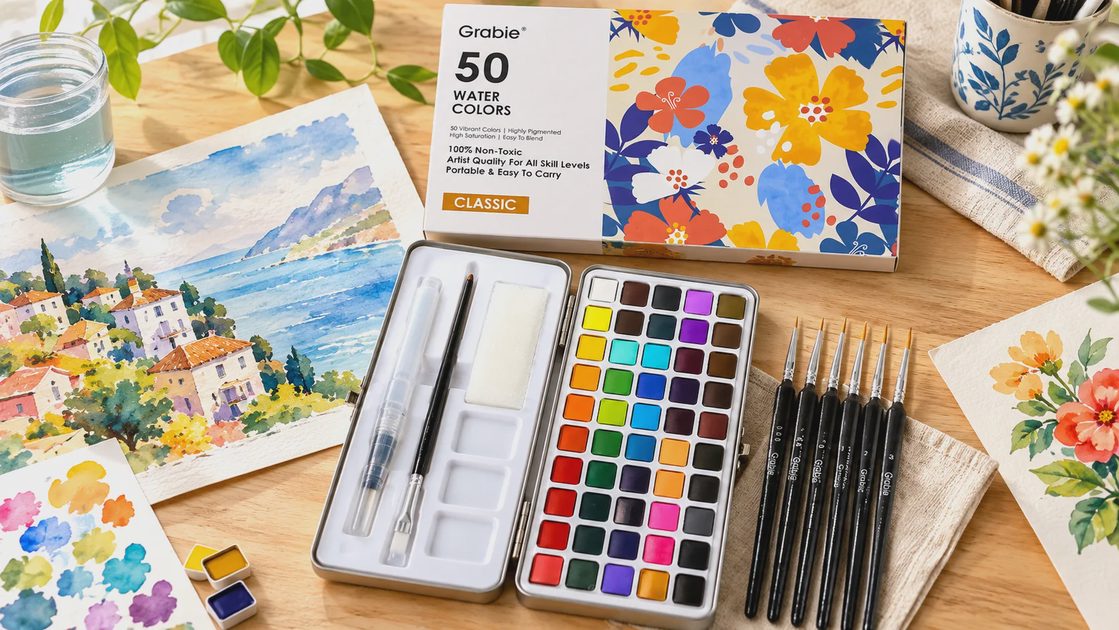
Forty paint chips, one wall, and no way to decide: that is the problem with choosing a room color. A chip makes you judge one color alone on a white card, a situation your walls will never be in. Sample pots fix that, but they cost real money and make you feel guilty about experimenting. Painters don't have this problem, and our fix costs about $20.
It's the Grabie 50 Color Watercolor Paint Set, a 50-pan tin I'd use to work out how to choose paint colors before a single can gets opened. One caveat: my rule is three months of living with something before I vouch for it, and this tin hasn't had that. So this is my painter's method applied to the spec sheet and thousands of buyer reviews, not a long-term verdict.

My Quick Verdict
Overall rating | 4 out of 5 (based on specs and reviews) |
|---|---|
Brand | Grabie |
Best for | Planning room colors, beginners, and travel painting |
Price | $19.99 |
Cost per color | About $0.40 |
Amazon rating | 4.7 out of 5 from 7,434 ratings; 7K+ bought in the past month |
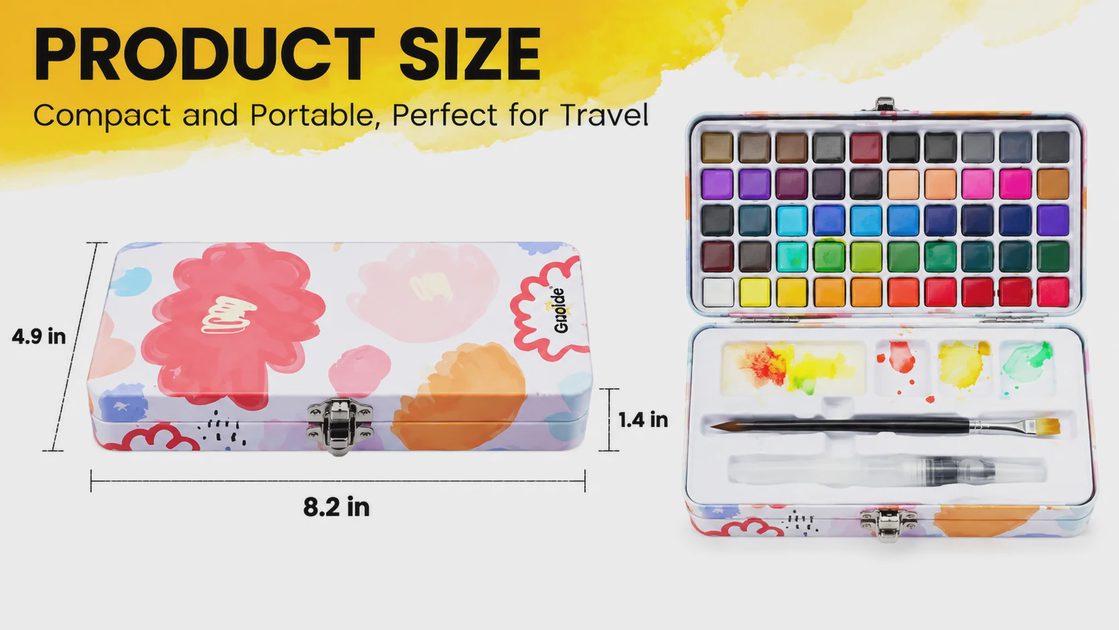
Size and weight | 8.2 × 4.9 × 1.4 inches; 12.5 ounces |
Biggest win | 50 colors and a swatch sheet at a price that lets you experiment |
Biggest catch | It's not wall paint, and the pans are small |
The rating split is lopsided in a good way: 85% five-star, 9% four-star, 4% three-star, and 1% each for two and one stars. One verified buyer put the praise simply: "The paints are highly pigmented. They are a joy to use." The complaints, which I cover below, are mostly about pan size.
The Painter's Rule: Judge Pairs, Not Single Colors
No color is good or bad on its own. Olive is gorgeous next to warm wood and dreary next to a cold gray rug. That's why a chip taped to the wall tells you so little, and why a stack of small painted cards you can shuffle tells you so much. I've made plenty of mistakes choosing paint colors the chip-first way, and every one came from judging a color alone.
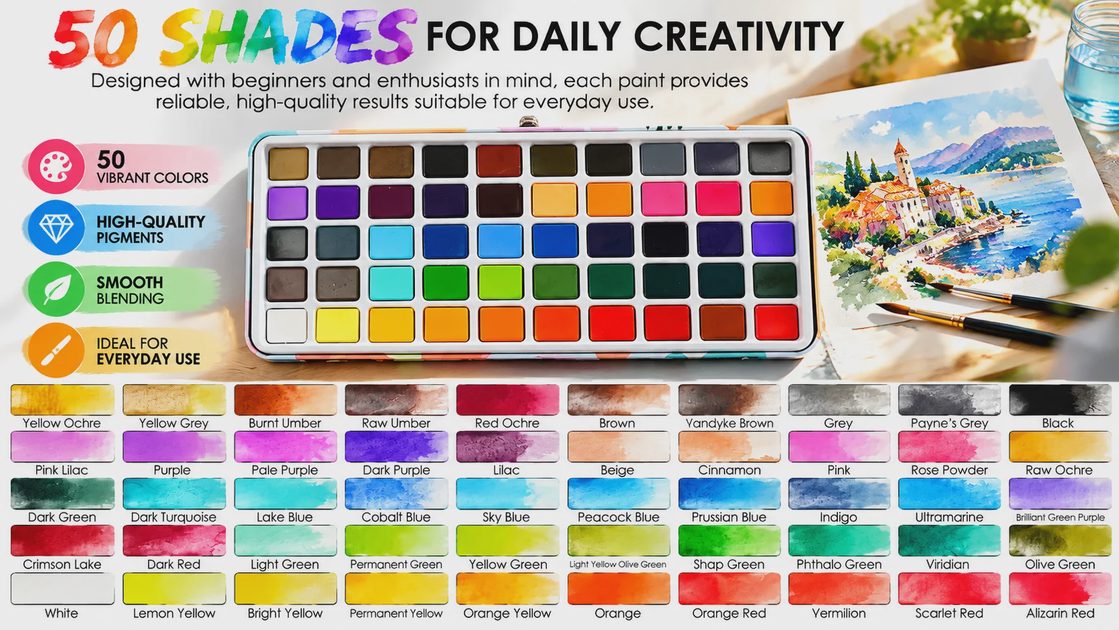
All 50 shades, labeled.
The Method: How to Choose Paint Colors Like a Painter
Start with what can't change. That's the sofa, the floor, the big rug. In my apartment, Bernice the sofa decides everything.
Pull three colors out of it. Find the nearest pans in the tin. The set has the earthy ones a room actually needs: yellow ochre, olive green, burnt umber, Payne's grey, cinnamon, and rose powder. If you'd rather build a paint color palette from one thing you already own, that's the same idea in more detail.
Swatch the whole set once. The included swatch sheet has a labeled box for each of the 50 colors. That's your master chart, and it keeps you from repeating mistakes.
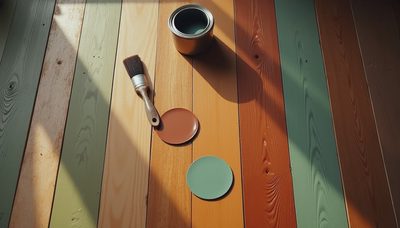
Paint cards you can move. Cut watercolor paper into palm-sized cards and paint a generous patch on each. Use the water brush pen to blend two colors on one card for an in-between shade.
Hold pairs against the room. Stack two or three cards next to the sofa, the floor, and the wall you're changing.
Apply the 60-30-10 rule. Fifty pans is a lot of choice, so narrow it down to three: a main color for about 60% of the room, a secondary for about 30%, and an accent for about 10%. When you choose a wall paint color, it's usually the 60 or the 30, and the cards tell you which.
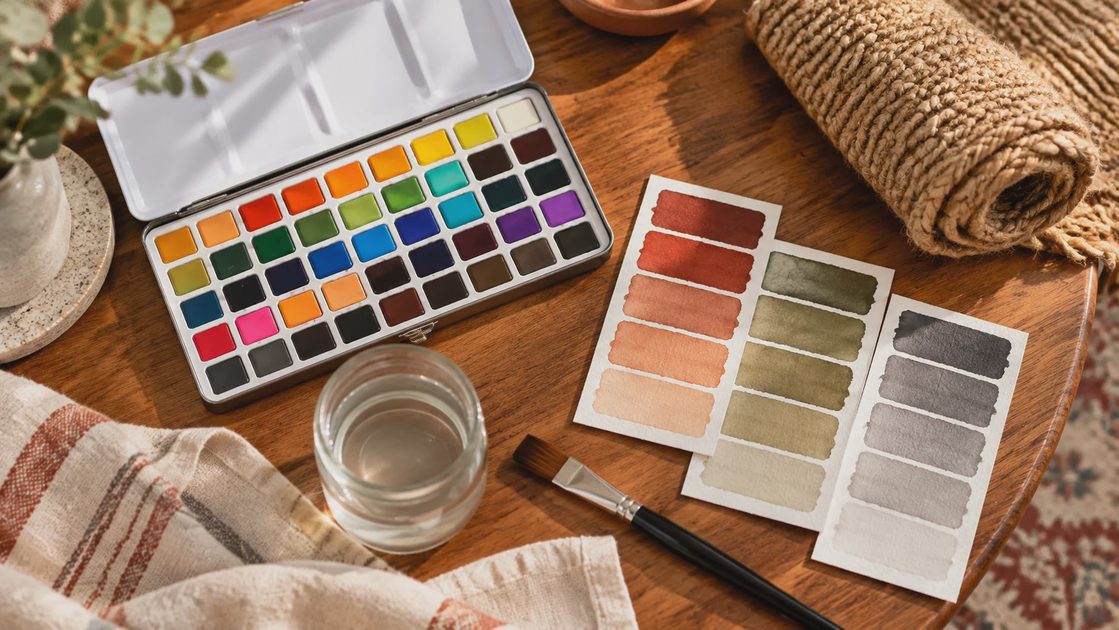
The swatch sheet and detail brushes.
How I'd Run It in My Living Room
I haven't run this with this particular tin yet, so consider this the plan. Say Bernice were a warm rust. I'd match her to the nearest pan, then try olive green and Payne's grey on two more cards, and stack all three against the rug in morning and evening light. Then I'd buy exactly one real paint sample.
Why a Cheap Set Is the Right Tool Here
At about $0.40 per color, Grabie makes experimenting cheap. Nobody is rationing a $20 tin, and fear of wasting paint is what keeps most people in greige. The lid even has a built-in mixing tray with three wells, and the tin is about the size of a thick paperback, so it moves from the dining table to the windowsill easily.
What You Actually Get in the Box
Here's what the Grabie tin holds, and why each piece matters for color planning.
Item | Qty | Why it matters for color planning |
|---|---|---|
Watercolor pans | 50 | A wide palette, from lemon yellow to Payne's grey |
Swatch sheet | 1 | A labeled master chart |
Detail brushes, sizes 3/0 to 3 | 6 | Small, but fine for narrow card edges |
Flat nylon brush | 1 | Fills the palm-sized cards |
Water brush pen | 1 | Blends colors on the card |
Sponge | 1 | Blotting extra water |
Metal case with lock clasp | 1 | Holds everything, with a mixing tray |
The listing calls the paints non-toxic and fade resistant, but not waterproof, which is normal: dried watercolor wakes up with a wet brush.
What Is Not Perfect
It's Not Wall Paint
Watercolor on paper has no sheen and dries differently from latex paint on a wall. Use these cards to choose relationships, then confirm your final pick with a real paint sample on the actual wall.
The Pans Are Small
This is the most repeated complaint. One happy traveler said larger brushes don't fare well, and a painter with pricier paints called the pans small even though the color performed. For palm-sized cards, I'd use the flat brush and the water pen.
The Extras, Payoff, and Refills
One buyer who already owned brushes would rather have had more paint. Another found the color payoff a bit weaker than hoped. A buyer of the 168-color version noted the pans aren't replaceable, and the 50-color listing doesn't advertise refills either.
The Cost-Per-Color Comparison
Set | Price | Colors | Per color | Notes |
|---|---|---|---|---|
Grabie 50 Colors (this one) | $19.99 | 50 | ~$0.40 | Plenty for a room palette |
Grabie 100 Colors | $29.99 | 100 | ~$0.30 | Cheapest per color of the Grabie sets |
Grabie 50 Premium | $29.99 | 50 | ~$0.60 | Check the listing for differences |
Grabie 100 Premium | $39.99 | 100 | ~$0.40 | Same per-color cost as this set |
Grabie 168 Colors | $59.99 | 168 | ~$0.36 | Most colors in the line |
Grabie 56 Foldable | $39.99 | 56 | ~$0.71 | Different design, 228 reviews |
Prang 16-Color Oval Pan Set | $5.62 (list $7.49) | 16 | ~$0.35 (list ~$0.47) | Student-grade classroom set; a narrower palette |
Cost per color is the listed price divided by the number of colors. Grabie prices are from Amazon and the Prang price is from School Specialty, all checked on October 14, 2026.
What the Table Tells You
Bigger Grabie sets cost less per color, but a room palette needs a handful of colors, not 168. The Prang set is cheap, but with only 16 colors you'll mix more and match less.
When I Would Pick Something Else
You want more in-between shades: the 100-color set, at about $0.30 per color.
You want to paint large artwork: tube paint, because these pans won't keep up.
Who Should Buy It
Buy it if you:
Are choosing paint, a rug, or a sofa and can't picture the combination
Are new to watercolor and want a low-risk start
Skip it if you:
Already own brushes and want more paint per dollar
Expect watercolor to match the final wall color exactly
Final Verdict
At $19.99 for 50 colors, it's the cheapest way I can find to start thinking like a painter about your walls, with only the 100-color tin beating it per color.

Letters
No letters yet — be the first to write.