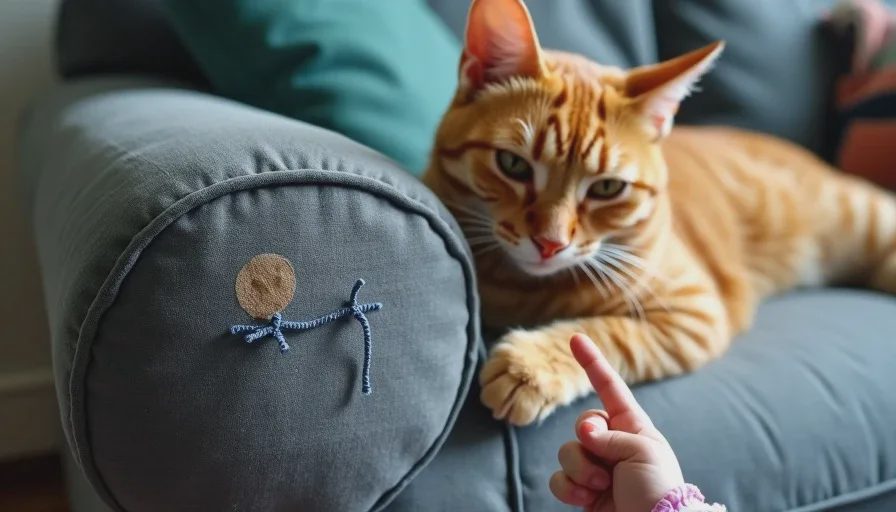
If upholstery could testify, our sofa would have a lot to say. It has absorbed grape juice, stomach bugs, spilled milk, marker "art," and the slow, deliberate assault of a cat who believes all fabric exists to be shredded. It has been stitched up by an amateur (me), scrubbed at 3 a.m. by a sleep-deprived parent (also me), and napped on by every member of this household including the cat who is actively destroying it. Five years in, it's still here. But it is the exception, not the rule. Over eight years of raising twins and cohabiting with Gouache, I've watched a lot of upholstery die. Here's the honest hierarchy of what survives, what betrays you, and what I will never buy again — no matter how good it looks in a catalog. This is durable upholstery tips from the front lines of realistic family home decorating, written by someone who has scrubbed more fabric than she cares to remember.
The Graveyard: Fabrics That Didn't Make It
Cotton Velvet (Died Year 2, Cause of Death: Grape Juice)
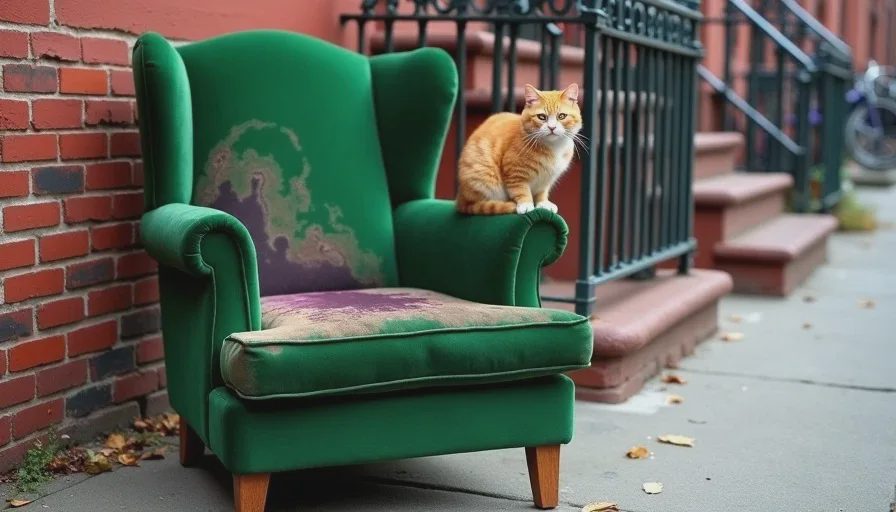
Let's talk about the green velvet armchair that I've mentioned in passing before, because it deserves its own eulogy. I bought it when the twins were about eighteen months old, seduced by the way the velvet caught the light and the salesperson's assurance that it was "surprisingly durable." Here's what "surprisingly durable" means in retail-speak: "We have never actually tested this fabric on anything more aggressive than a Instagram photo shoot."
Cotton velvet is a pile fabric — the soft surface is created by tiny loops of cotton fiber standing upright. Those loops are excellent at trapping liquids, pigments, and regret. When Felix spilled grape juice on the armrest (he was two, it was a sippy cup malfunction, these things happen), the juice didn't just sit on top of the fabric. It wicked down into the pile, through the backing, and into the cushion foam. I blotted. I dabbed. I applied every cleaning solution recommended by the internet. The stain faded but never disappeared. Over the following year, it accumulated a supporting cast of apple sauce, milk, and something I never identified but chose to stop investigating. By the time I hauled it to the curb, the chair looked like it had been through a particularly harrowing episode of a crime drama.
The lesson: cotton velvet and small children cannot coexist. If you must have velvet — and I understand the appeal — go for a high-quality synthetic velvet made from polyester or a performance blend. The fibers are smoother and less absorbent, and most spills will bead up rather than sink in. But even then, accept that velvet will never be the low-maintenance choice.
Linen (Died Year 3, Cause of Death: Everything)
I love linen. I love how it looks, how it drapes, how it photographs, how it breathes. I love linen clothing, linen curtains, linen bedding. I do not love linen upholstery, because linen upholstery is a betrayal waiting to happen. Linen is a natural fiber with very little elasticity and an almost magnetic attraction to stains. It wrinkles if you look at it. It stains if you spill water on it — just water, plain water, can leave a watermark on light-colored linen. It frays at the seams under heavy use. And it's nearly impossible to clean aggressively without damaging the fibers.
We had a pair of linen-blend dining chair cushions for about eighteen months. They were a warm oat color that I chose specifically because it wasn't white — I thought I was being practical. Within six months, they had absorbed enough spilled milk and pasta sauce to develop a kind of patina that was less "wabi-sabi" and more "health code violation." I tried machine washing them. They came out two sizes smaller and with a texture like sandpaper. I replaced them with cotton canvas cushions that can survive a wash cycle, and I've never looked back.
Anything White (Died at Various Times, Cause of Death: Hubris)
I don't need to elaborate on this, but I will briefly: white upholstery in a home with children or pets is an act of profound optimism that the universe will almost certainly punish. If you have a white sofa and it's still white, you either don't have kids, don't have pets, or don't actually sit on it. I'm happy for you, but this advice is not for you.
The Survivors: Fabrics That Earned Their Keep
Crypton and Performance Blends (Still Standing, Year 4+)
I've mentioned this before, but it bears repeating with more detail. Crypton is a moisture-barrier fabric originally developed for hospitals, hotels, and restaurants — environments where spills are not hypothetical. The fabric has a liquid-proof backing that prevents anything from soaking through to the cushion core, and the surface fibers are engineered to repel moisture. When I recovered our $75 sofa, I chose a Crypton blend in deep gray-blue. It was about $400 for the fabric and labor, which is more than I usually spend on anything, but it has been the single best furniture investment I've made.
Here's what Crypton has survived: grape juice (again — Felix has a thing for grape juice), coffee, milk, marker, cat vomit, and a melted chocolate bar that Cleo hid under a cushion and forgot about for what I estimate was three weeks. In every case, the liquid beaded up on the surface and wiped off with a damp cloth. The melted chocolate required a little more effort — I used warm water, a drop of dish soap, and patience — but it came out completely. The fabric hasn't pilled, hasn't faded significantly, and hasn't developed that shiny "worn" look that some synthetics get. The cat's claws have done minimal damage because the weave is so tight there's nothing for a claw to catch on.
Other performance fabrics worth considering: Sunbrella (originally for outdoor furniture, now widely used indoors), Perennials (expensive but nearly indestructible), and some of the house-brand performance weaves from retailers like Room & Board. The common thread — no pun intended — is that these fabrics are engineered for durability first and aesthetics second. They're not the cheapest option upfront, but they're cheaper than replacing a sofa every three years.
Cotton Canvas and Denim (Battle-Scarred but Standing)
If you're on a tighter budget or buying secondhand, look for heavyweight cotton canvas or denim upholstery. These are workhorse fabrics — the same materials used for tote bags, painter's drop cloths, and jeans. They're dense, tightly woven, and they get softer and more comfortable with age. Our old armchair — not the velvet casualty, but a different one that predates the twins — is covered in a charcoal cotton canvas that has held up for over a decade. It has a few stains, yes, but they've faded into the background over time, and the fabric itself is still intact. Canvas and denim can usually be spot-cleaned with mild soap and water, and many can handle a gentle machine wash if the covers are removable.
Vintage Wool Upholstery (The Dark Horse)
If you're thrifting — and I hope you are — keep an eye out for vintage wool upholstery. Wool is naturally stain-resistant (lanolin, the oil in wool, repels liquids), flame-resistant, and incredibly durable. Mid-century pieces often came in wool blends that have survived sixty years and still look good. I have a vintage wool ottoman from the 1960s that I found at a flea market for $25. It's a muted mustard-gold tweed with flecks of brown and cream. It has never been professionally cleaned. It has absorbed foot traffic, cat naps, and spilled drinks, and it still looks like a piece of furniture rather than a crime scene. Wool can be harder to find and may feel scratchy against bare skin, but for a piece that doesn't get direct skin contact — like an ottoman or a side chair — it's a brilliant choice.
The Cat Factor: What Gouache Has Taught Me About Claws
Cats are the variable that most upholstery guides ignore. Gouache is not a malicious cat. He doesn't scratch furniture out of spite. He scratches furniture because it's there, because it feels good on his claws, and because he is a cat and cats do not read upholstery care labels. Over five years, I've learned which fabrics trigger his scratching instinct and which don't.
Fabrics cats love to scratch: Loosely woven fabrics with texture — bouclé, tweed with raised threads, anything with a nubby surface that claws can catch on. Chenille is basically a scratching post disguised as upholstery. Velvet, surprisingly, can go either way — some cats find the pile irresistible, others don't like the texture. Gouache is firmly in the "velvet is for shredding" camp.
Fabrics cats tend to ignore: Tightly woven, smooth fabrics with no texture for claws to grip. Crypton falls into this category. So does leather and faux leather — though I don't love the look of leather in our space, and it's a whole different maintenance conversation. Microfiber and other ultra-smooth synthetics also tend to be cat-resistant.
What to do if your cat has already claimed a piece of furniture: Provide a better alternative right next to it. When Gouache started on the sofa arm, I placed a sisal scratching post directly beside the sofa, rubbed it with catnip, and praised him extravagantly every time he used it. He still scratches the sofa occasionally — I haven't eliminated the behavior, just redirected most of it. The stitched repairs on the arm are proof that you don't need a perfect solution, just a manageable one.
The $3 Upholstery Cleaner That Actually Works
I have tried a lot of upholstery cleaners. Spray bottles with proprietary "enzyme formulas," foams that promise to lift stains with the power of oxygen, powders that you sprinkle and vacuum. Some work. Most don't work any better than the mixture I now make myself, which costs about $3 and uses ingredients I already have in my kitchen. Here's the recipe:
1 cup warm water
1/4 cup white vinegar
1 teaspoon clear dish soap (not the kind with added moisturizers or bleach)
A sprinkle of baking soda (optional, for odor-heavy stains)
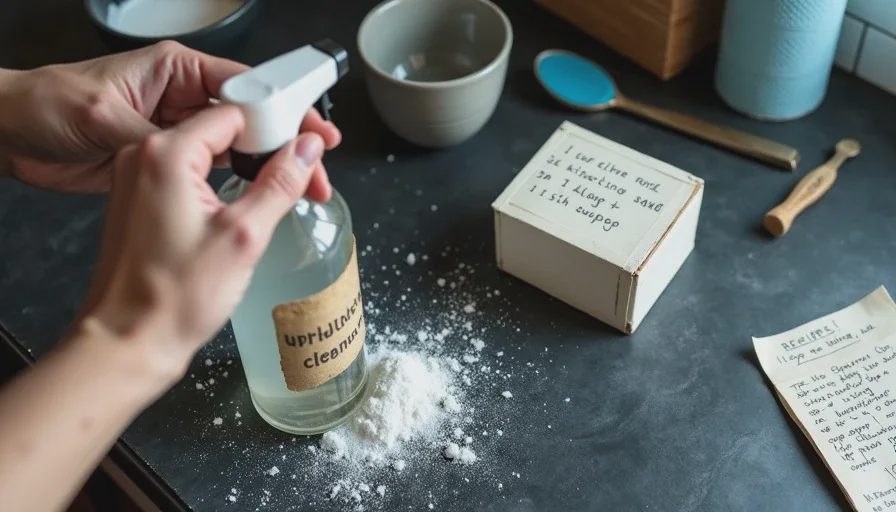
Mix it in a spray bottle. Spray lightly on the stain — do not soak the fabric, because soaking can drive the stain deeper or damage the cushion. Blot with a clean white cloth (colored cloths can transfer dye). Repeat until the stain lifts. For set-in stains, let the mixture sit for five minutes before blotting. Always test on an inconspicuous area first, because I am not responsible for what happens if your upholstery is secretly made of something that dissolves in vinegar. (Nothing dissolves in vinegar, but test anyway.)
This cleaner has removed: grape juice, coffee, chocolate, tomato sauce, mud, and something unidentifiable that Gouache left on the ottoman. It has not removed: the memory of the green velvet chair, which I carry with me as a cautionary tale.
The Bottom Line
If you're furnishing a home with kids, pets, or just a realistic understanding that spills happen, here's the hierarchy I've landed on after eight years of trial and error:
For high-use seating (sofas, everyday chairs): Performance fabrics like Crypton or Sunbrella. Worth the upfront cost. If budget doesn't allow, heavyweight cotton canvas or a tight-weave synthetic blend.
For low-use accent pieces: Vintage wool, cotton canvas, or denim. Avoid linen and cotton velvet unless you're comfortable with visible wear.
For anything within cat range: Tightly woven, smooth surfaces. Provide scratching alternatives. Accept that some damage is inevitable and learn to stitch.
For cleaning: The $3 DIY spray. Keep it under the sink. Use it before stains set. Forgive yourself when they do.
The furniture in a family home is not an investment portfolio. It's a collection of surfaces that will be spilled on, scratched, napped on, and lived on. Choose fabrics that can take it. Repair what you can. And when something finally gives out — which it will, eventually — remember that the curb in Brooklyn has claimed finer furniture than yours, and there's always another stoop sale waiting around the corner.



Letters
No letters yet — be the first to write.